Press Release -
Plans published for ‘Mini Switzerland’ – a national demonstrator to transform rural public transport
Tuesday 3 February 2026
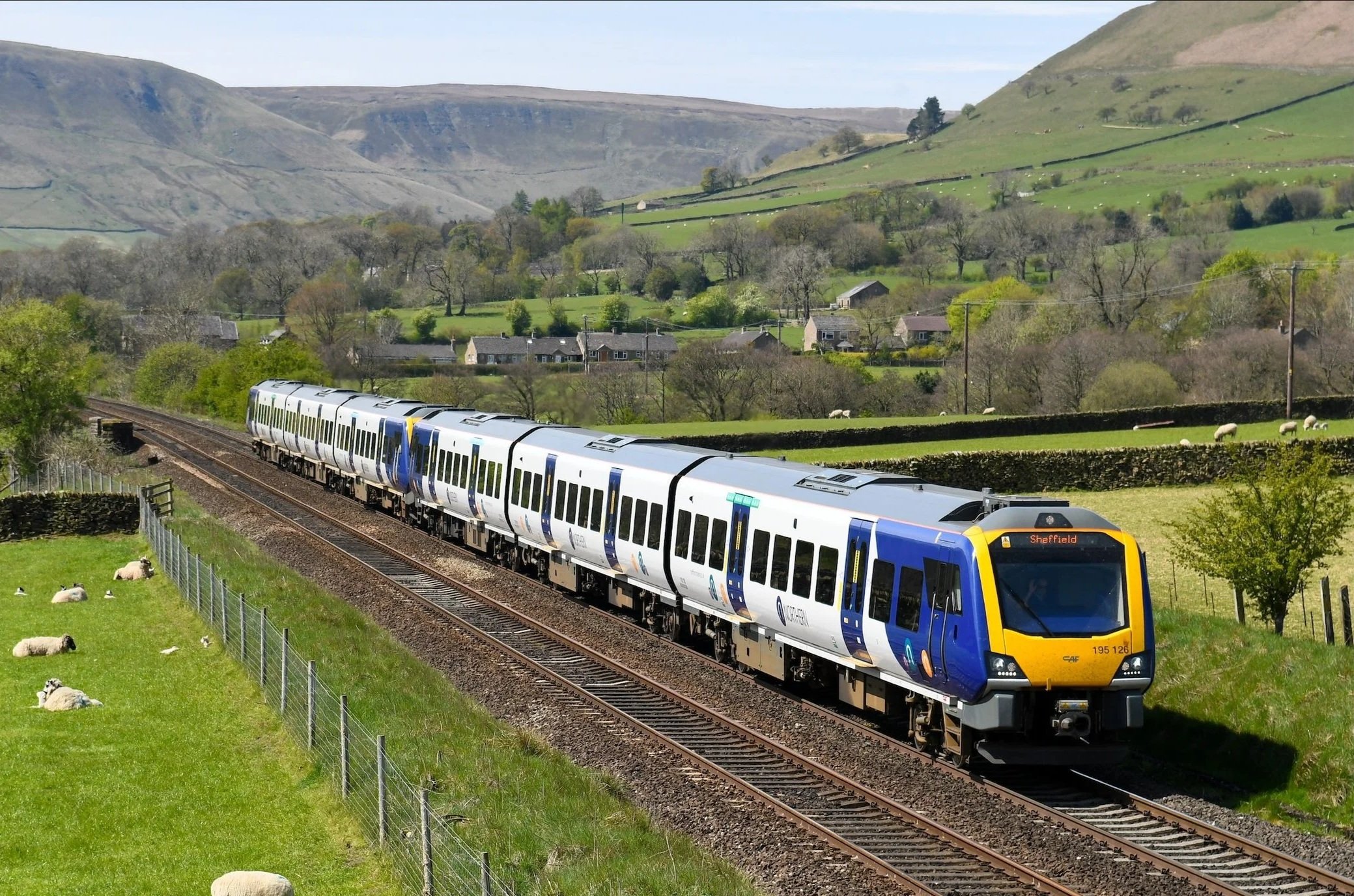
Detailed plans have been published today for ‘Mini Switzerland’, a national transport demonstrator soon to be launched in the Hope Valley.
The new report sets out a fully worked-up blueprint for creating a Swiss-style integrated public transport network in the Peak District, where hourly buses and trains are carefully timed to connect, tickets work across all modes, and the whole system operates as one joined-up network.
The project represents an opportunity for the East Midlands to demonstrate national leadership in rural mobility, by hosting the UK’s first real-world demonstrator of fully integrated bus and rail services outside of a major city.
Unlike many transport schemes, Mini Switzerland does not depend on new railways or large-scale construction. Instead, it focuses on better coordination of enhanced services, supported by modest infrastructure improvements, clear information and simple, integrated ticketing.
The proposals for the Hope Valley set out by the report include:
· Regular, easy-to-remember hourly bus services
· Guaranteed connections between buses and trains
· Simpler tickets that work across operators
· Better access to jobs, education and healthcare
· A realistic alternative to driving for visitors to the Peak District
If successful, the demonstrator will provide real-world evidence on how integrated networks grow ridership, improve value for money and reduce car dependency in rural areas.
Thomas Ableman, founder of ‘Freewheeling’ and creator of the Mini Switzerland concept, said: “For years we’ve been stuck in a cycle where rural public transport costs more and delivers less. Mini Switzerland shows there’s another way. By properly integrating buses and trains, we can unlock far more value from the networks we already fund.
“Transport integration is one of the most powerful, and most cost-effective, tools we have to widen access to opportunity and drive economic growth. At a time when budgets are tight, it’s never been more important to make the system work as a joined-up whole.”
Roger Clarke, Trustee of Hope Valley Climate Action, said: “For people in the Hope Valley, this is about being able to get to work, to school, to shops and to healthcare without always needing a car. It’s also about managing visitor traffic in a way that protects our villages and landscape.
“We’re proud that our community can help lead a project that could shape the future of rural transport across the country.”
Alex Robertson, Chief Executive of Transport Focus, the statutory passenger watchdog, said: “Passengers consistently tell us they want public transport that is reliable, easy to understand and good value for money. The principles behind Mini Switzerland – clear timetables, joined-up connections and simple tickets – are exactly the kinds of improvements that can make a real difference to people’s experience. Demonstrating how this can work in a rural area would be an important step forward.”
Train and bus operators have also expressed support for the principles behind the project.
Alex Hornby, Commercial and Customer Director at Northern Trains, said: “We’re already working hard to make our services more reliable and more customer-focused, and we’re keen to play our part in making better connections between rail and bus.
"It's great to see this initiative coming together. We are supportive of any project which reflects Northern's aims to improve integration and remove barriers to using public transport.”
Julian Peddle, Director of High Peak Buses, said: “Local bus services are often seen as a last resort, but with the right network design they can be a central part of how people move around. We welcome the focus on coordination and simplicity, which can help buses reach a much wider market.”
The full Mini Switzerland report was part-funded through a grant by the Foundation for Integrated Transport and is available to download here.
Notes to Editors
Mini Switzerland is a volunteer-led project, coordinated by Hope Valley Climate Action with support from transport professionals and organisations across the UK, and funding support from the Foundation for Integrated Transport.
The Hope Valley demonstrator is designed as a five-year learning project to generate evidence on integrated rural transport networks and their impact on ridership, costs and travel behaviour.
The Hope Valley has been chosen as the ‘demonstrator’ for the project because it reflects many of the challenges faced by rural Britain: scattered villages, busy visitor destinations, existing but poorly connected bus and rail services, and high levels of car use.
By tackling these challenges, Mini Switzerland aims to create a tested, evidence-based model that other rural areas can adapt.
While Mini Switzerland is a rural project, many of the benefits will be felt by residents of major cities. The Hope Valley railway line, which will host Mini Switzerland, connects Manchester and Sheffield; two cities in which approximately one third of households have no access to a car. These residents will now have direct, easy access to the green spaces of the Peak District National Park; benefiting their mental health and the local visitor economy.
Rather than attempting to reform the entire national system at once, Mini Switzerland follows a model that has already worked in Britain: demonstrate success in one place, then scale the learning.
A decade ago, the Mini Holland programme in London showed how Dutch-style cycling infrastructure could work on British city streets. What started in a handful of outer London neighbourhoods went on to influence national active travel policy and delivery across the country.
Mini Switzerland aims to do the same for integrated rural public transport.
The report has been part-funded by a grant from the Foundation for Integrated Transport.
Media contacts
Thomas Ableman
Contact