Notes from the Rail Summit
You didn’t fancy spending your Friday in a windowless conference room in Canary Wharf?
Well, you missed out - because the UK Rail Summit this year was more encouraging than for a long time.
For nearly a decade, it has felt like rail’s been in a holding pattern, but it finally feels like there’s a sense of future and purpose.
For those who didn’t make it, here’s my report.
A sense of future
First thing to say is that there was a genuine buzz in the room - and the presentation by Alex Hynes was one of the big reasons.
As someone who believes in empowerment, accountability and taking decisions as close to the customer as possible, everything Alex said was music to my ears.
A big part of leadership is storytelling, and Alex tells the story of what he wants the future GBR to become better than I’ve heard it told by anyone (including the government that created it).
Though, for me, stand-out best best talk of the day was by Steve White, who articulated the way SouthEastern and Network Rail Kent are becoming one, customer-focused organisation. My favourite line was his instruction to SouthEastern staff to “go and find your new Network Rail best friend who can help you do your job better.”
Last year, I wrote that if we want GBR to succeed, we shouldn’t start with an org chart but instead create the incentives and structures to encourage people to work across the borders of the existing organisational structure. What Steve’s leading in Kent is exactly what I hoped to see.
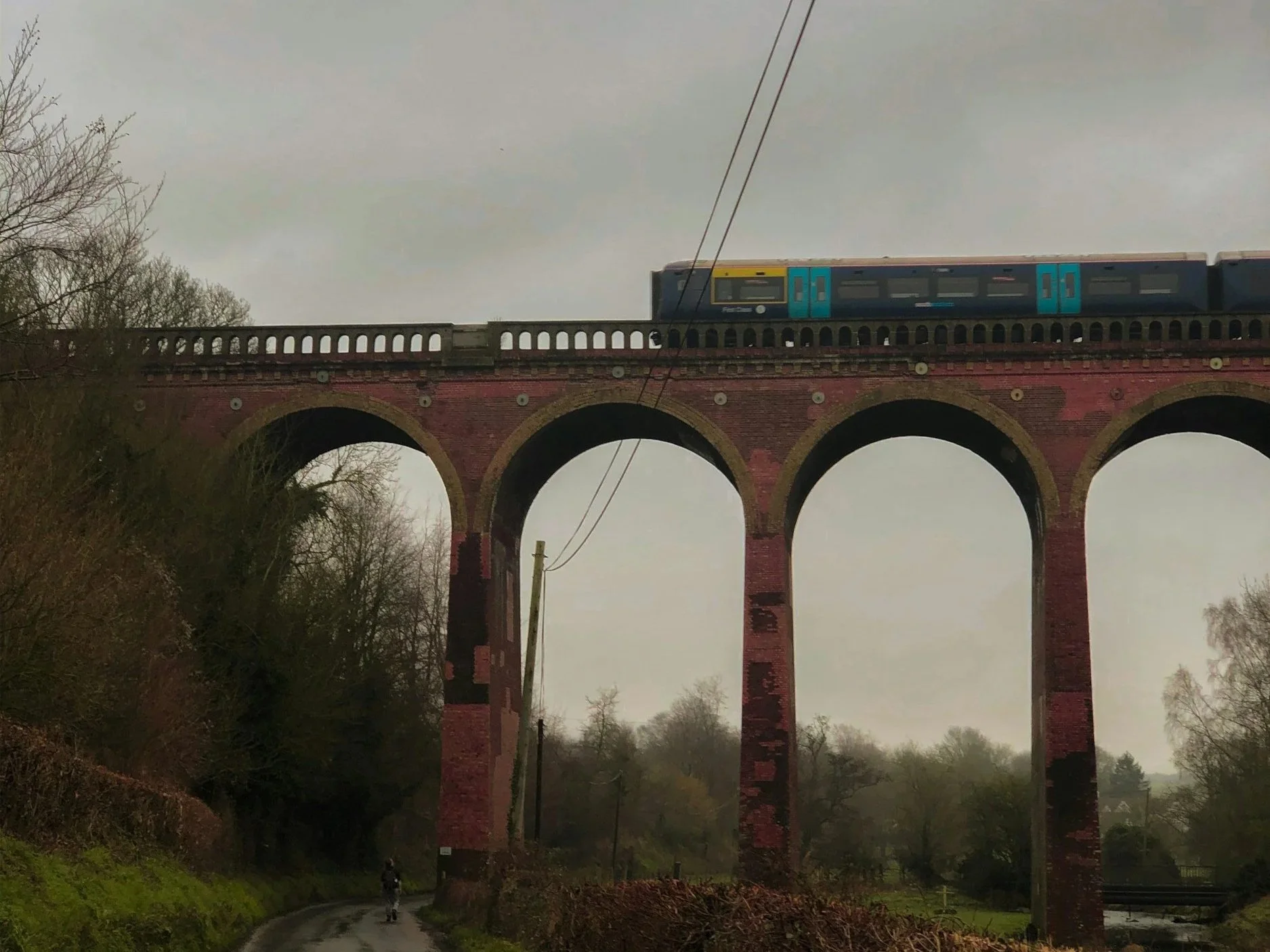
An arty picture of a SouthEastern train in Kent, not taken by me.
Switzerland
I was also genuinely thrilled to see just how many references there were to Switzerland dotted throughout the day: by my, very rough, count, roughly half the presentations referred to Switzerland (though that might just have been becuase I was in the room - they tended to namecheck me at the same time. I’m slightly worried I’m becoming synonymous with Switzerland…)
Dead right! We have a lot to learn from Europe’s best railway, so let’s make sure we learn it.
Loosen the reins
So what worried me? Lord Hendy was inspirational as always, but he described how he gets a daily performance email from Alex Hynes and Jeremy Westlake.
Now that’s probably a good thing, right now, but it will be a mark of success when a Government minister does not feel the need to micromanage the railway, and instead there are locally driven accountability models.
It still doesn’t feel totally clear what those accountability models will be; at the moment, it feels rather like an assumption that everyone will do the right thing will suffice.
Maybe they will, but for the reasons I’ve written about previously here, we can’t assume that because it worked in a TfL, it will work in GBR. Indeed, if there was a downbeat session on Friday, it was the section on devolution. It’s not yet clear how combined authorities and local authorities will be able to influence GBR, and there’s some nervousness that it won’t be sufficient. Even TfL sounded concerned.
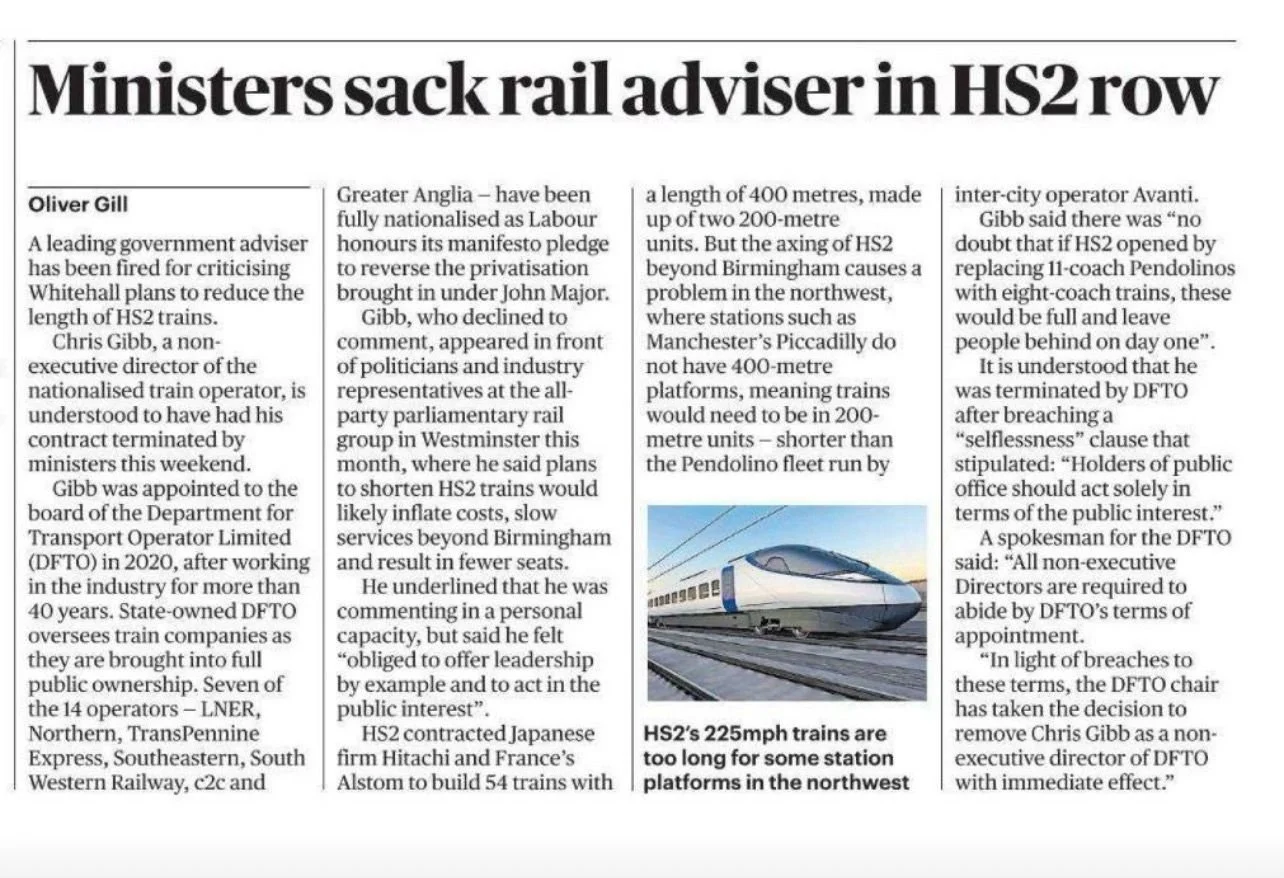
My worries about accountability only racked up during the weekend after hearing that my former Grad scheme mentor, Chris Gibb, has been fired from the DfTO Board for speaking out about his view that the first phase of HS2 will require continued use of the Pendolino train fleet. That feels really disappointing. (If you’re interested in his ideas, he spoke to me on the podcast). I’d largely written this post on Friday before the news about Chris broke, and my big worry was that GBR seems content to assume that if they do something, by definition it must be right, as they’re good people motivated by public service. Public bodies need tight accountability mechanisms as they don’t have the profit motive; if the GBR Board is only going to tolerate people who repeat the house line, those accountability mechanisms will be weaker.
My other worry is around brand strategy. This might seem an esoteric thing to be worried about (the topic did not come up in the conference), but I have reason to be worried.
Alex’s presentation was clear and articulate that the local integrated business units are going to be empowered. He used the example of empowered businesses in the Go Ahead group, which is a great example.
However, Go Ahead quite deliberately made the decision not to introduce a single brand across all its businesses, because once a single brand exists then the brand has to mean something. At which point, you then need head office to enforce all the various brand policies and norms, and you lose the culture of empowerment that Alex articulated.
It’s already been decided that GBR will have a single brand, and it’s also been decided that GBR will be empowered. My worry is that the latter will be sacrified in the service of the former. I’ve written before about how sameness is not the same as consistency, and the needle that now needs to be threaded is to ensure that GBR’s brand strategy is around a high-level consistency but which allows plenty of local room for experimentation and innovation in the interests of the customer.
SBB (Swiss Railways) in their master’s programme at Swiss Polytechnic University in Lausanne about how to run a railway instruct their students that a railway should “standardise and centralise only as much as necessary. Competition of ideas plays a role at the customer interface". [my underlining].
GBR’s brand strategy needs to support this.
The Railway isn’t Transport
My final concern is that this moment of change must not start and stop with the railway.
I’m thrilled the government is funding mini Switzerland, as the entire point of Mini Switzerland is to act as a national demonstrator of how the railway can interact with local bus services in a typical rural area.
The railway needs to remember that it’s not the end of the journey. While only 14% of journeys are currently multi-modal, that’s partly because railway stations are - in effect - dead ends. GBR will have the scale and capacity to be the anchor of an entire national travel system, but it needs to want the task.
A Shout Out to a Politician
Finally, a big shout out for Ruth Cadbury, who chose to spend the entire day at the conference, sitting in the audience... listening.
When did you last hear of a politician doing that? Normal politician behaviour is to do what Lord Hendy did: turn up, deliver the keynote, and promptly leave.
Now I'm not criticising: I've done exactly the same thing myself, and I'm not remotely as important as Lord Hendy. But big kudos for a front-rank politician who chose to spend an entirely day quietly learning from experts.
So I’ve still got a few worries about accountability and how the current direction of travel towards empowered business units will butt up against the GBR brand when it’s launched. But the fact that Alex Hynes wants GBR to be centred around empowered businesses is a good start; that was not guaranteed.
Overall, it was a positive and encouraging session.
After many years of stasis, the future is coming into view!