How to get More Young people onto Public Transport
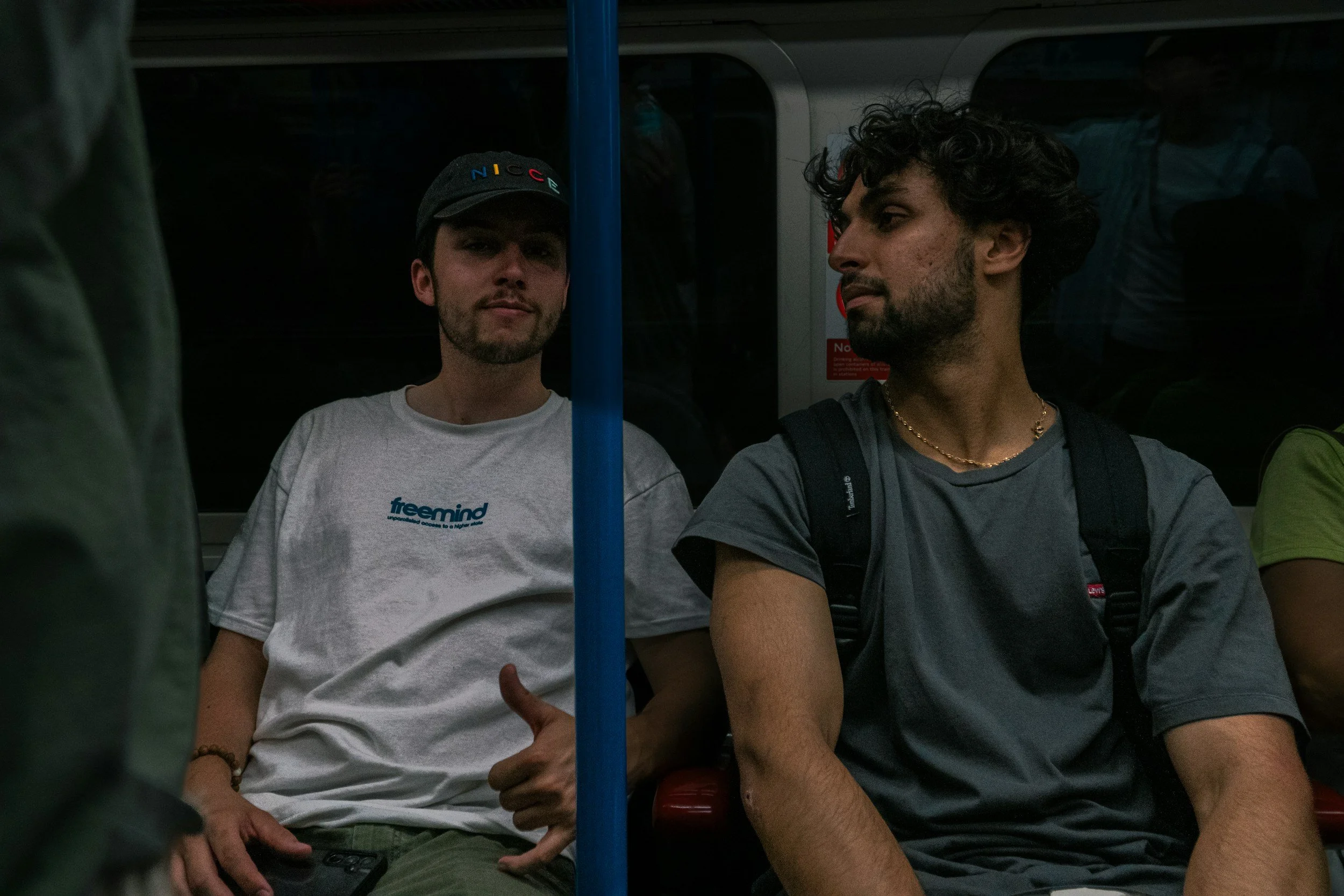
Young people are so eco-conscious that they’re a captive market for public transport, right?
The proportion of young people taking out driving licenses has collapsed in recent decades, so we just have to sit back and wait as a growing proportion of the population become our customers.
I’ve heard people say one of these quite a few times.
I’d like it to be true… but I’m not sure it is.
Last time DfT researched why young people weren’t taking out driving licences, it wasn’t principle - it was cost.
That’s an issue because electric vehicles are getting cheaper and the perception of them is that they’re greener.
Whether they’ve cut back on driving for financial or moral reasons, we can’t assume young people are ‘ours’.
So let me present the Freewheeling Manifesto for Youth…
Child Fares to 18
One of the most mindbendingly stupid things that the public transport industry has ended up doing is charging adult fare from 16.
It dates from when the school-leaving age was 16, but it no longer is. Education or training is compulsory to 18, so 17 year-olds are likely to be living at home and dependent on their parents, just as they were at 15.
We double their fares exactly a year before they’re allowed a driving licence; just long enough for them to get really frustrated with the cost of their travel.
The child/adult threshold was 14 on many bus services in the 1970s, when 14 was the school-leaving age. It raised to 16 when the leaving age raised to 16. Now it needs to become 18.
A new threshold at 12.
I realise money’s tight so this change needs to be paid for.
One way of achieving this could be a stepping stone increase in the 12-18 fare. London offers free train travel to primary-age kids and half-price fare to secondary-age. In many European countries, including Belgium, the Netherlands and Italy, the adult threshold starts at 12. In one sense, that’s better than 16 as the shock doesn’t hit just as the driving lessons start.
The rail network could reduce the 12-17 discount to 33%, with (as today) greater discounts available with a Family and Friends Railcard.
Free Birthday First Class Tickets
Around 40% of people in the UK never travel by train. That means entire families grow up without the kids ever discovering public transport exists. These kids are highly unlikely to grow up into public transport users.
How could the cycle be broken? Maybe by turning public transport into a treat.
Let’s say that every family gets a free family first-class pass to use anywhere on the network within 10 days of the kid’s 18th birthday.
Given it will be used for leisure travel, it will probably be used at a weekend when first class is quiet. The abstraction (i.e. the lost revenue caused by giving someone something for free that they would otherwise have purchased) will be minimal. The changed perception of the railway for those young people will be far more valuable than the lost revenue.
This could be the final stage in a series of similar free standard class birthday travel passes available throughout their childhood.
Go Dutch
The Netherlands has a superb travel pass for students that we should steal. The pass is available either as a weekend or weekday product. If you choose a weekend product, you get free travel from midday Friday to the end of Sunday, with a 40% discount the rest of the time. If you choose a weekday product, you get free travel Monday to Friday, with a 40% discount at the weekend.
The genius of this is that the amount of free travel is large enough that it undermines the economics of buying a car, but there are still plenty of days on which the student needs to pay a fare.
Our young people virtually get no discount (given that, very roughly, 80% of people in the UK are entitled to a railcard, the existence of one for young people is barely a discount at all) so they have every incentive to start driving.
Student discounts are especially valuable as it’s at key moments of change that people form their mobility habits. Moving to uni is one of those moments. For that reason, we can build on the Dutch pass by maintaining its validity for a year after graduation. That means the young person maintains their public transport habit.
Mini Switzerland
Young people growing up in rural areas get very frustrated. Local bus services are not timed for a night out, so they’re dependent on mum and dad for lifts. That leaves them with two messages: 1) you need a car for mobility freedom. 2) public transport is useless.
There are many reasons for rolling out Mini Switzerland nationwide. Allowing young people to build a dependence on public transport is one of them.
Getting the basics right
All these are in addition to the features of ‘getting it right’ that are just as important to young people as everyone else.
A clean, safe, comfortable, reliable, integrated network will attract young people as much as others. Its absence will drive young people away just as much as others.
It’s just that it matters so much for with the young.
👋 I'm 𝗧𝗵𝗼𝗺𝗮𝘀. I'm all about helping transport organisations build better cultures for our fast-changing world.
🚀 Through 𝘀𝗽𝗲𝗮𝗸𝗶𝗻𝗴, 𝗺𝗲𝗻𝘁𝗼𝗿𝗶𝗻𝗴, and 𝗰𝗼𝗻𝘀𝘂𝗹𝘁𝗶𝗻𝗴, I energise teams, shape strategy and remove barriers to progress.