It was economist Milton Friedman who said that “the actions that are taken depend on the ideas that are lying around”.
So here is an idea for the future: franchising.
Not the thing that we called “franchising” on the railway, which was actually an operating concession, nor the thing that we are calling “franchising” on the buses, which is actually subcontracting.
I mean “franchising” as understood by the rest of the business world.
We haven’t tried it, but it is actually very well suited to the world of GBR now being created.
Before I describe a franchise, I’ve just got to emphasise something very important: we have been using all of the wrong words for things for decades.
In this article, I’m going to use the correct words, which results in “franchising” meaning something totally different to what we in transport use it to mean. I’m sorry, but I can’t think of a better solution.
What a franchise actually is
McDonald’s doesn’t run most of its restaurants. Around nineteen in twenty worldwide are run by franchisees: local businesspeople who put in their own money, hold the franchise for 20 years and pay McDonald’s a slice of every sale in return for the brand, the menu, the systems and the suppliers.
The deal is strict where it needs to be. A Big Mac in Bolton has to look and taste exactly like a Big Mac in Brighton. The signage, the uniforms, the till system and the food safety standards aren’t up for debate.
So why do McDonalds do it? Well, partly because they think that local managers will run the business better. They hire the staff, set the rotas, set their own prices (which is why menu prices vary from one branch to the next) and do their own local marketing (it’s why so many tiny sports teams are sponsored by McDonalds, and why they’re so good at snapping up advertising hoardings run by local entrepreneurs not the national media agencies). They also innovate. The Big Mac, the Egg McMuffin and the Filet-O-Fish were all invented by franchisees responding to their local market, not by head office in Chicago. I’m told these things taste nice though as I’ve only eaten from McDonalds once in my life (portion of chips, Wellington Street London, 1999), I’m probably not the best judge.
Because it’s a local entrepreneur’s money, they care about whether the Bolton restaurant succeeds in a way that a salaried manager reporting to to the UK East Finchley HQ never quite will.
It’s also quite helpful that they put their own money into the business.
The same model also applies to SpecSavers and a whole bunch of other household names.
Franchising GBR
So how would we apply this to our world?
Well, in a few years’ time, GBR will have a brand, and a brand architecture. All the fast pointy trains will be “GBR Intercity” or something similar. GBR services in the major conurbations will increasingly be specified, and possibly branded, by combined authorities.
But what about other areas?
The risk is that local services end up run by a huge, politically motivated, vertically integrated public sector bureaucracy based in Derby. Now, there are public sector monoliths that are good at responding with agility and nimbleness to customers and changing circumstances, but — let’s be honest — the story across the world is that public sector organisations tend to be less good at this stuff than local businesses.
(By the way, this is not a “private good, public bad” diatribe. The public sector performs essential roles that the private sector never could and never would. I have often written about the indispensability of the role of the state across all areas of public service, but it’s also worth being clear-eyed about the public sector’s strengths and weaknesses.)
This is where franchising could come in.
The Cornish Branch Line franchise
It may be that a local team based in Cornwall, who understand the Cornish market and can personally know all of their drivers, conductors, and station staff, would get better results from the Cornish branch lines than a team centred in Derby or Swindon.
They are the equivalent of the McDonald’s branch in Bolton, that knows Bolton far better than if the store was run out of East Finchley or Chicago.
But, as with McDonald’s, this would not be a free-for-all.
The Cornish Branch Line franchise would sign up to GBR’s policies on branding, ticketing and other key elements of brand consistency.
But, they would also have the freedom to innovate—and make sensible decisions.
Maybe the St. Ives branch line could have some kind of special leisure product for a premium fare?
Maybe there are some early morning trains that are never used and don’t need to run, but there’s a smart way of extracting more capacity on summer Saturdays through a change to local working arrangements?
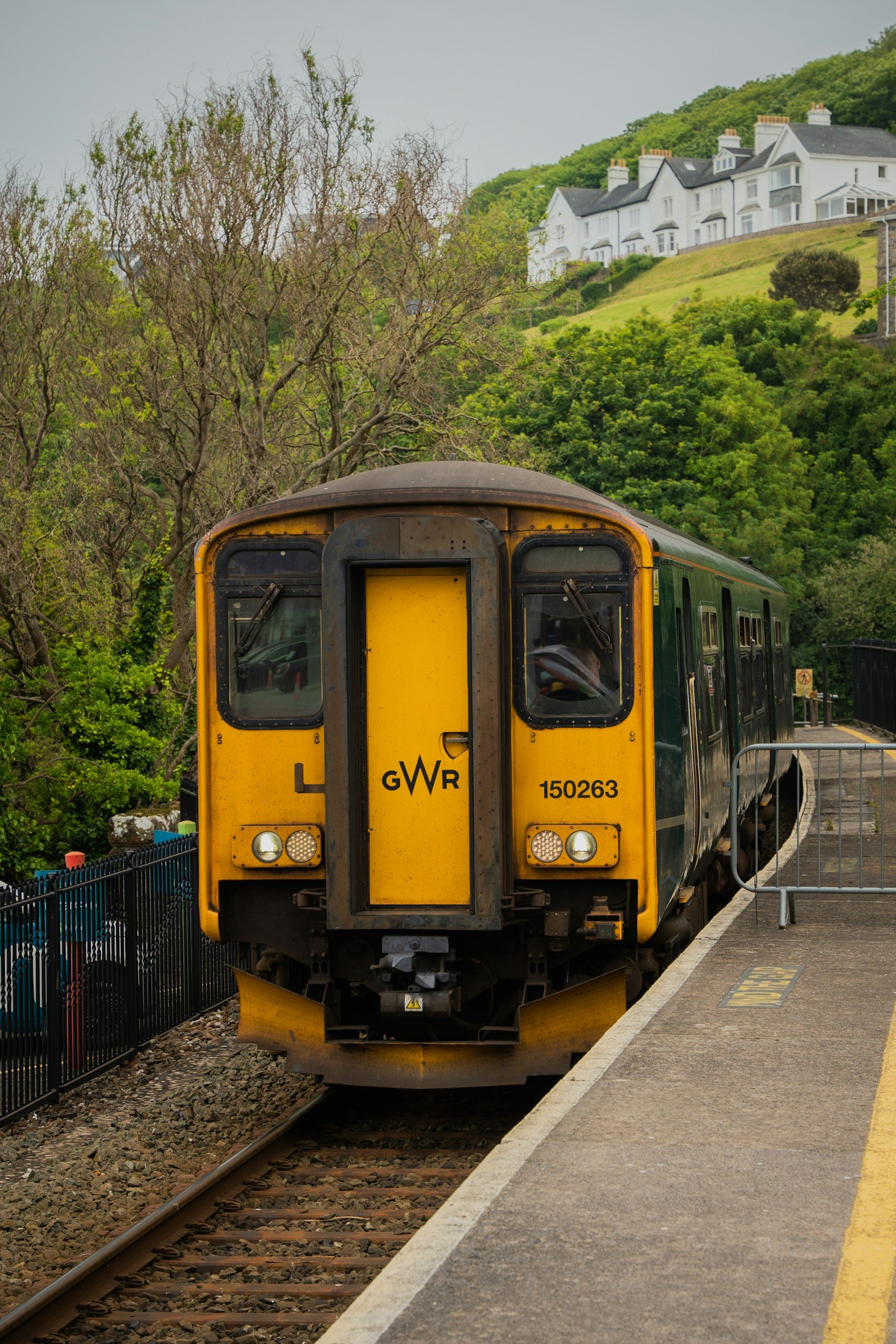
Maybe there are costs that a small business based in St. Austell wouldn’t need to incur that can be stripped out but which would be invisible from Swindon?
Maybe there are local marketing opportunities that a motivated, incentivised team will be able to pick up on that would just not be visible from Derby? Those McDonalds sports teams happen for a reason.
Maybe they will just care more because it’s their business and they will earn more if it succeeds?
Maybe the staff will feel more motivated because they work for a Cornish small business?
Not the old fake franchises
Crucially, these actual franchises would not be like the old franchises— they would focus on where the local team can make a difference, and not where they can’t.
The old fake franchises were bonkers. The only decision that actually mattered was what you put as your forecast for GDP growth, as this overwhelmed the impact of any actions you could take. The old franchises were not competitions between teams for who could run the railway best. They were contests between economic modellers for forecasting employment rates in the City of London in five years’ time.
Looking back, it was a truly insane way to make decisions. Truthfully, it seemed pretty insane at the time too.
These real franchises would come with full adjustment mechanisms to deal with macro effects, so that success or failure depended on micro actions. Like a typical McDonald’s franchise, they would have long (20-year is standard for McDonalds) terms, giving the team the incentive to invest to achieve meaningful, sustainable micro effects.
Over a 20-year term, a motivated team on a small local railway can achieve quite a lot. Trust me, as a former staffer of Chiltern Railways, I do know this!
Taking costs out
And it might also be easier for a local team to take costs out, or at least avoid unnecessary costs.
Look at the current standoff over East West Rail.
The current iteration of Chiltern Railways, in which all key decisions have been taken centrally by DfT, is stuck in a stalemate over who will operate the doors.
It is forgotten that the first section of East West Rail was opened in 2015 by the Chiltern Railways team of which I was part. Even though it included an entirely new piece of infrastructure, it opened as a DOO railway. That is despite RMT’s policy that no new DOO railway will open.
Why was this possible?
Years of local relationships and trust. (Not built by me, I should add. Trade union relationships were not part of my role).
Beyond the branch lines
And it doesn’t just have to be limited to branch lines.
Maybe a franchisee would have more chance of growing revenue on the Great Western mainline than GBR. They could be given the chance. Again, nothing would outwardly change to the customer: this would still be a GBR Intercity route, but a local management team will be making the decisions.
And, as with McDonalds, it doesn’t have to be all-or-nothing. McDonalds still run some restaurants in-house, and so could GBR. It doesn’t need to be dogmatic.
Concessions
While we are talking about this, we should also talk about concessions.
We’ve somehow ended up in nomenclature hell in recent years, and what are referred to as “concessions” (London Overground, Elizabeth line, Merseyrail at present) are nothing of the kind.
They are the same model as the buses called franchising and are, in fact, subcontracting. A true concession is what the railway used to call franchising!
(God help us all.)
A concession involves handing over a chunk of the network to a private operator, who then have the ability to make pretty much all their own decisions.
It might be that, in future, concessions become a more workable option for intercity services than open access.
Open access currently feels like it’s about to be crushed by the combination of the ‘not primarily abstractive' rule and GBR’s inevitable ‘not invented here’ attitude to outsiders demanding to run trains on their network.
But, in future, with GBR having total control of the timetable, they could carve out routes suitable for operation as concessions, and sell those concessions to private companies.
That would give operators the chance to innovate outside the straitjacket of GBR branding but without the free-for-all of open access.
What Switzerland does
It won’t surprise you to learn that I think we can learn from the Swiss here.
Not because they operate franchises; they don’t.
But they do have local railways and different operators providing intercity services under concessions.
The Swiss don’t allow open access on their domestic railway, and their new agreement with the EU opens the door only to international services, and even then with the right to put the clockface timetable first and to make newcomers join the national fare system. Their view is that an operator free to pick its own paths will cherry-pick the busy routes and break the integrated timetable that makes the whole system work.
Instead, the federal government decides the timetable and awards a ten-year concession to run the long-distance network. Long-distance services run without subsidy, so operators need to delight customers to earn revenue.
SBB holds the concession for almost everything. But in 2018 the Federal Office of Transport decided to hand two lines around Bern to their competitor, BLS. SBB appealed, and the eventual settlement has BLS running Bern–Biel, Bern–Olten and Bern–La Chaux-de-Fonds with its own trains and drivers, carrying the full revenue and cost risk, though formally under SBB’s concession.
It isn’t a clean story, but the principle is the one that matters. The centre decides what runs, and it can hand the right to run a route to a company that will take the risk on it and has the opportunity to offer a different customer proposition.
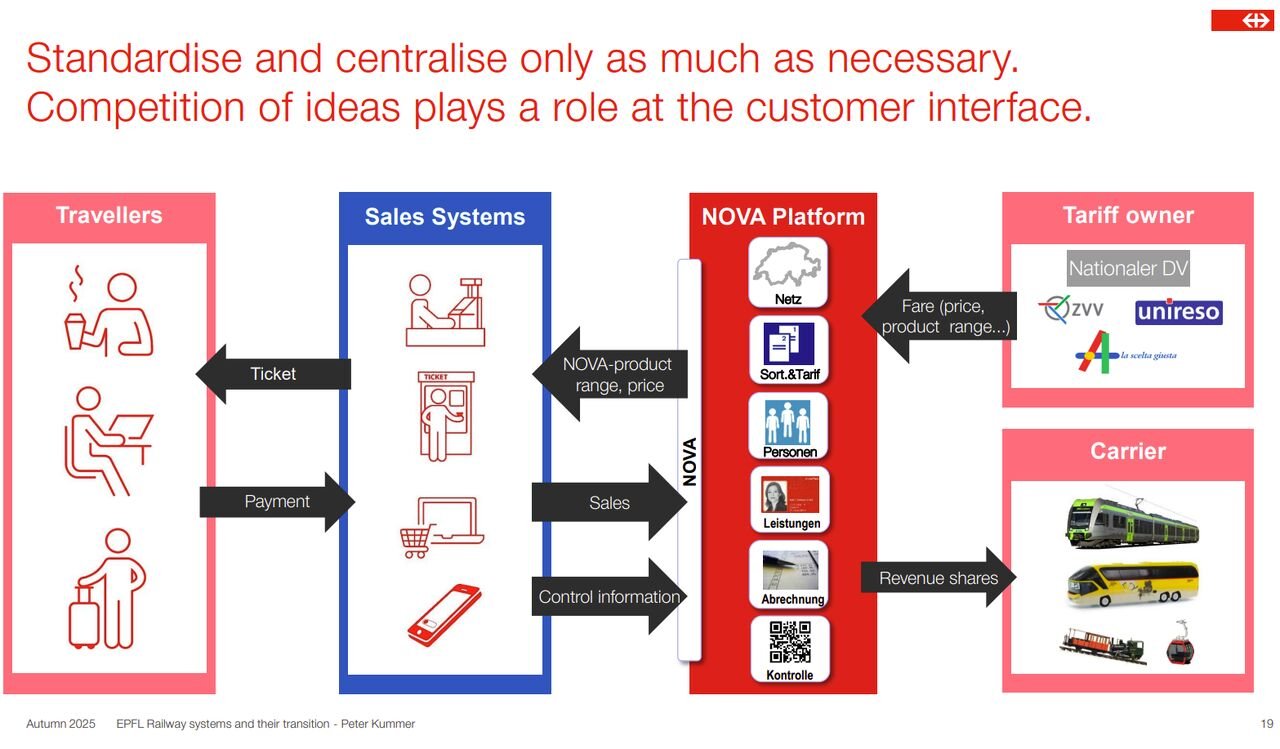
The key point here is that Switzerland understands a crucial principle. It’s a principle so crucial that they teach it at the railway systems master's course at the Swiss Polytechnic University in Lausanne. The principle is: "Standardise and centralise only as much as necessary. Competition of ideas plays a role at the customer interface."
Real franchises and real concessions are the way to bring this crucial principle to life.
Ideas lying around
GBR is being designed now, and the people designing it have a lot on. Nobody is going to set up a franchising model this year or next year.
But Milton Friedman was right; it is worth having ideas lying around. When the moment comes that GBR needs to find a way of running the Cornish branch lines better, or growing revenue on a route that’s flatlining, the ideas that are lying around are the ones that will get picked up.
This one should be lying around. And this time, we should call it by its proper name: franchising.