Would You Give Mustafa Suleyman A Job?
Have you heard Rory Stewart’s interview with Mustafa Suleyman on the impact of AI on The Rest is Politics?
If not, it’s worth listening to.
Suleyman co-founded Deepmind, the firm (now owned by Google) that catalysed the current wave of AI innovation. He now leads AI for Microsoft, one of the ‘hyperscalers’ determining the future of the global economy and possibly our whole civilisation.
He’s also a former officer at the GLA (Greater London Authority).
And if this sounds surprising, that’s a problem.
An under-appreciated reason for the success of Transport for London in the 2000s is the wave of energetic outsiders brought in: people used to making things happen and utterly out of sympathy with the normal barriers our sector throws up.
So let’s start with Mustafa Suleyman.
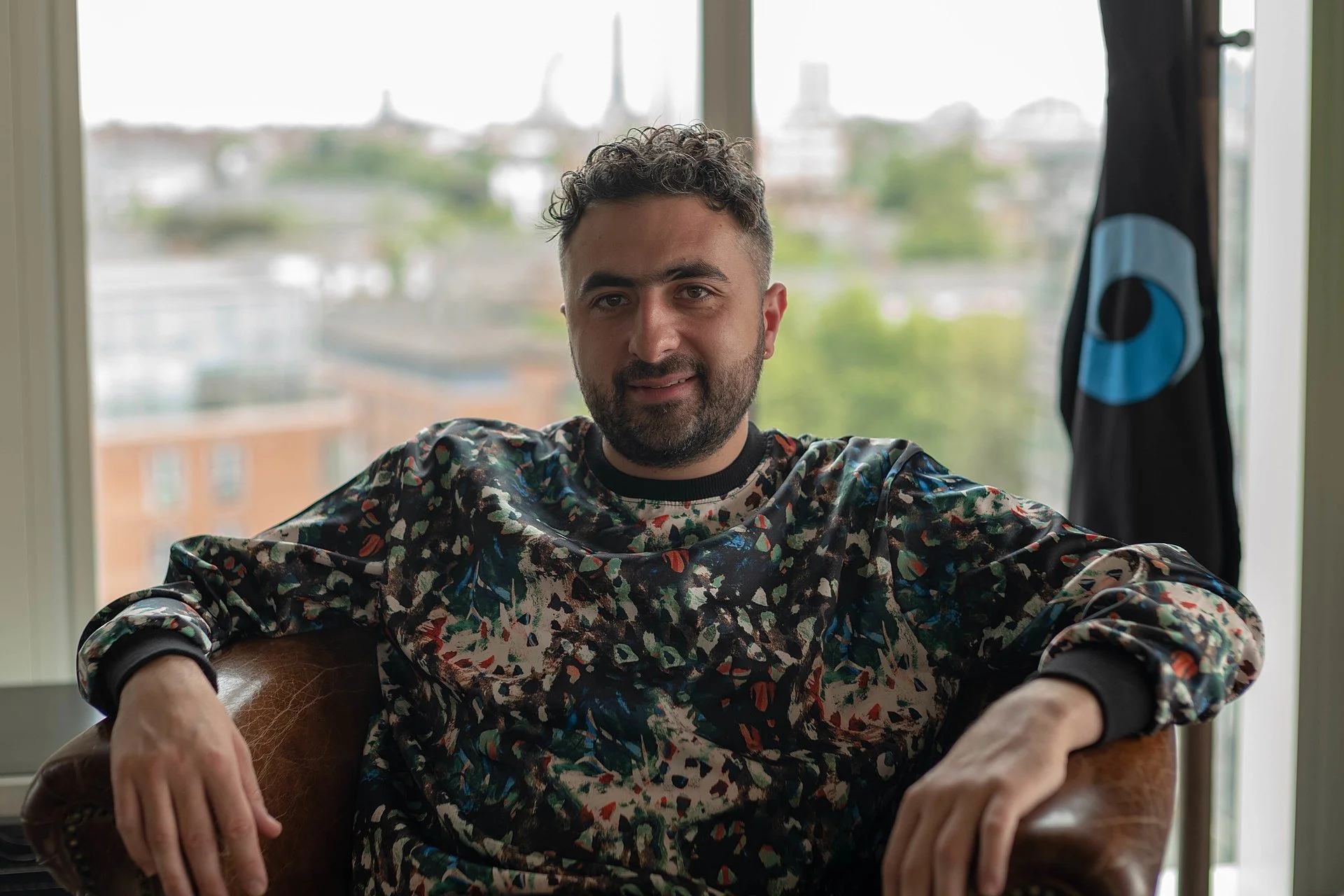
A London lad
Most tech bros came out of Silicon Valley.
Inherited wealth gifted them a place at Stanford, and from there it’s literally a short walk into Silicon Valley.
So it may come as something of a surprise to learn that the co-founder of Google Deepmind’s dad was a cab driver, his mum a nurse and he grew up off the Caledonian Road.
According to his Wikipedia page, his early career looked like this:
At 19, Suleyman dropped out of Mansfield College, Oxford to help start the Muslim Youth Helpline with his university friend Mohammed Mamdani, a telephone counselling service. The organization would later become one of the largest mental health support services for Muslims in the UK.
Suleyman subsequently worked as a policy officer on human rights for Ken Livingstone, the Mayor of London, before going on to start Reos Partners, a ‘systemic change’ consultancy that uses methods from conflict resolution to navigate social problems. As a negotiator and facilitator, Mustafa worked for a wide range of clients such as the United Nations, the Dutch government, and the World Wide Fund for Nature.
Then he founded DeepMind.
Less than a decade after leaving Ken Livingstone’s office, Suleyman was selling the world’s most valuable AI startup to Google in their biggest-ever European transaction.
A Local Government officer
Now, I’ve never met Mustafa Suleyman, but he was probably a bit weird. Most people who achieve as much as he has are.
But he was also staggeringly driven and incredibly bright.
The kind of person we need if we’re to achieve change.
The early 2000s under Ken Livingstone were a good place to be driven and bright.
People I know well like Shashi Verma, Vernon Everitt and Ben Plowden were recruited into TfL in this era. Both are bright and driven. TfL was then led by Bob Kiley and Jay Walder: two Americans who were driven, bright and nightmarish to work for.
Someone at TfL once told me the story of someone making the mistake of starting a sentence of explanation to Bob Kiley with “To be fair, Bob…” only to find themselves cut down by a shout of “Fuck ‘fair’! I want results!”.
We need forceful outsiders
The early 2000s were a period of dynamic change and innovation at TfL, and a lot of it was driven by people like Vernon, Shashi and Ben who were recruited from outside.
These people didn’t respect the normal ways of doing things partly because they didn’t know what they were.
They came from environments in which they were used to getting things done, and doing so at pace.
Gareth Powell, now MD at Stansted and formerly TfL’s Chief Customer & Strategy Officer, estimates that in 20XX, YY% of TfL’s leadership team had been recruited from outside our sector.
Crucially, it was no higher than YY%. It’s also absolutely crucial to have people like Gareth (and Lord Hendy) who grew up in our world and understand it intimately. As long as, like Gareth and Lord Hendy, they are also bright and driven.
Indeed, work I’ve done looking at the leadership teams of the world’s most successful organisations suggests that the best are led by experienced insiders but supported by a powerful cohort of driven outsiders.
Which means we need to be a welcoming place for people like Mustafa Suleyman.
If you’re leading a Combined Authority, ask yourself “Would Mustafa Suleyman work here today?”
We’ve become more risk-averse and cautious. The truth is, he probably want to work for you and you probably wouldn’t want him.
Now, Mustafa Suleyman is an extreme example. He left DeepMind having been accused of bullying. But the tough reality is that people who achieve big things often turn out to be pretty tough to work with.
And even if you don’t want him personally, it raises an important question. Does your culture reward those who question assumptions and propose bold solutions, or just those who keep things tidy and predictable?
You don’t need someone as extreme as Suleyman, but the price of progress can be a few people who make you feel a bit uncomfortable.
If you want to make big things happen, you need to go and find people who are used to doing just that.
I’m no Mustafa Suleyman, but part of my role is in being paid to come and ask challenging questions of your organisation. The joy is that we can always tell me to go away again. Contact me if you would like questions asked.