Capital of the world?
Which city is the capital of the world right now?
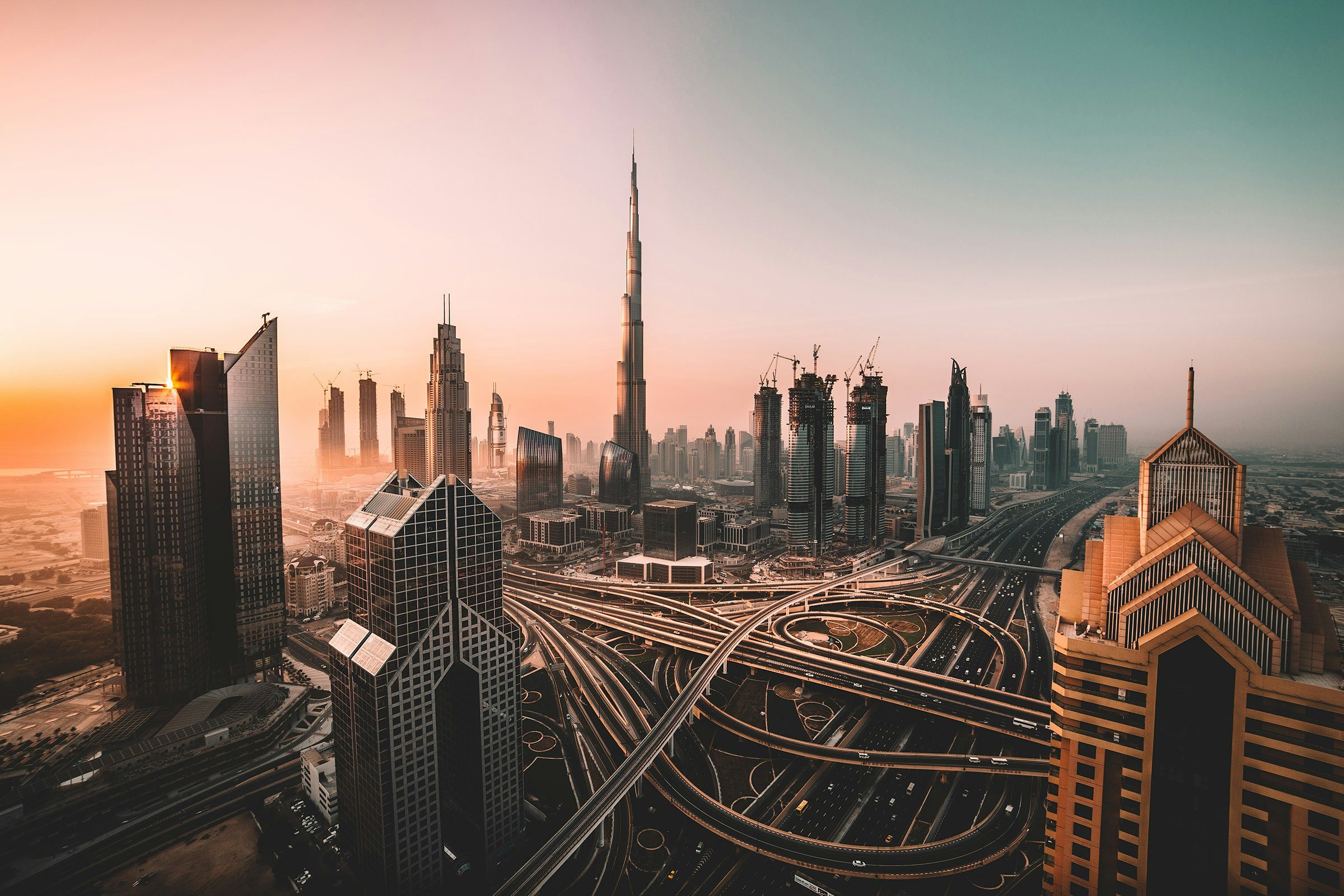
Dubai?
No, untested and too superficial. And it’s a war zone.
Shanghai?
Hamstrung by resistance to immigration.
Singapore?
Too regimented.
Lagos?
Maybe next century.
For now, the options are largely the same as in the 20th century. There’s a reason Del Boy wrote “New York, Paris, Peckham” on the side of his van: London’s two main rivals are largely unchanged.
So is it New York?
Well, until recently, New York was having a bad spell. It spawned Donald Trump and a big part of its claim is hosting the United Nations, which is wobbling. While Mayor Mamdani is almost painfully charismatic, his signature policy - free bus travel - is wildly expensive, hard to get through New York’s dual governance and won’t actually achieve its goals. I wrote about the downsides to free transport here.
Nevertheless, New York has eclipsed London as a financial centre.
How about Paris?
Well, I would argue it’s not there yet. But, for reasons I’m going to come onto, it may be for the rest of the 21st century - if we don’t take action.
London still has a persuasive case.
It is the global capital of the legal industry (40% of global business and financial transactions), is home to the world’s largest theatre district (40% more sales than Broadway), is one of the best-educated cities in the world (60% of its population are graduates), is one of the safest cities in the world (lower homicide rate than both New York and Paris) and has the biggest startup scene outside the US.

And a creative services sector that produced Paddington, The Movie.
So why do I worry that it’s all at risk?
Because London’s also stagnating.
Productivity has not just failed to grow in the last twenty years: it’s actually fallen by 2%. London’s lost productivity growth accounts for 42% of the nation’s slowdown.
There are multiple reasons for this; the biggest of which being that pre-crash productivity was inflated by the banking sector’s risky (and arguably illegal) behaviour.
But there is another reason.
As The Economist put it in its special London edition on the 31st January (from which many of the stats above are sourced):
High housing costs are a big deterrent to living in London. Those who stay can often only afford to live farther out, which means more time spent commuting and less productivity at work. The city’s infrastructure problems make it hard for these people to do their jobs well.
The article goes on to describe many other place-based issues: insufficient laboratory space, too few homes being built, poor connectivity.
Basically, London is also suffering from the same problem that all the UK’s major cities suffer from: inadequate transport.
London may no longer be the biggest city in the world, but the 11-15 million people who live in the London economic area are a lot of talent.
The problem is that much of it can’t be matched with jobs.
To understand the problem, come with me from my home in Walthamstow to an address in Waltham Abbey, just eight miles away.
First, we jump on the Victoria line of the Underground, which runs every 2-3 minutes. At Tottenham Hale, we’ll get the half-hourly train to Waltham Cross. From there, we’ll get the bus to Waltham Abbey. As we’ve crossed the Greater London border on the train, we’ve lost the TfL red bus network with its heavily subsidised, frequent routes. The service into Waltham Abbey is made up of a mix of routes, with waiting times from the train varying but typically around 10-15 minutes. The whole journey of eight miles takes 90 minutes.
A more direct way would have been to take the Weaver Line of the Overground to Chingford and get a bus along the main road straight into Waltham Abbey but the route was chipped away and then scrapped during the austerity era.
To be fair, the route Citymapper recommends is to get the 20 bus and then the 66 bus, which reduces the journey time to 83 minutes but the cost of the unreliability of the 20, which passes multiple private schools.
Waltham Abbey is closer to Trafalgar Square than Heathrow Airport is but, by a quirk of the borders, is not in Greater London. As a result, someone who wanted to be at a desk job in central London’s legal district by 9AM would need to leave Waltham Abbey at 7.26 for a journey of just 15 miles.
Waltham Abbey is an extreme example but, even in TfL-served Greater London, the public transport system reduces once you cross the north and south circular roads. As a result, the already high costs of housing are driven up by the need to pay for proximity to transport. Living within 500 metres of a station (roughly 5-7 minute walk) is worth an 8% property price premium, according to Nationwide. That’s around £40k of extra house price. Lots of people simply can’t afford it, but that reduces the range of jobs they can reach. That, in turn, makes London a less useful city.
The core purpose of a city - the reason so many people live packed close together - is as a matching service between talent and opportunity.
In London, the subscription fee for the matching service has become too high.
Connecting the Suburbs
This is not a problem unique to London.
But other cities are solving it through ambitious plans to connect their suburbs.
Some, like Berlin, have already got exceptional suburban connectivity gifted by their forefathers. In Berlin’s case, it’s the outstanding Ringbahn orbital railway.
But London’s great rival, Paris, is stepping up.
What Paris has understood - and what London has not yet properly faced up to - is that the economic strength of a global city in the 21st century depends on stitching the outer suburbs into a single functioning labour market.
That is the logic behind the Grand Paris Express, the largest urban transport project in Europe. I wrote about it here.
It’s breathtaking in scale - but based on solid strategic foundations.
It is 200 kilometres of new, fully automated orbital metro, 68 new stations, and - most importantly - a network designed explicitly to connect suburb to suburb. It recognises that jobs, homes, universities and laboratories are no longer all to be found in the centre. The modern economy is polycentric, and the transport system has to be as well.
The funding model is just as important as the engineering. The project is being delivered by Société du Grand Paris Express using long-term, hypothecated taxes on offices and commercial property across the wider Paris region, alongside green bond issuance. In other words, Paris has created a mechanism that captures some of the uplift that better connectivity creates, and recycles it directly into building the network. It is patient capital, tied to a patient plan.
Governance that matches the geography of the economy
Just as significant as the new tunnels is the quiet institutional revolution that has taken place above ground in the twenty-five years since I first visited Paris.
Back then, the Paris urban area was fragmented. The Metro and buses were largely run by RATP, the suburban railways by SNCF and strategic control was diffuse. Today, the organising brain of the system is Île‑de‑France Mobilités, a regional transport authority covering the entire metropolitan economic area, not just the historic city.
Île-de-France Mobilités plans the network, sets fares, specifies services and lets contracts to operators. It is deliberately mode-agnostic and geography-wide. The result is that transport policy now follows the logic of the labour market, not the 19th-century municipal boundaries.
London once tried this — and then stopped halfway
London, of course, has been here before.
The creation of London Transport in 1933 integrated buses, trams and Underground lines across a wide metropolitan area under one strategic authority. It recognised that the economic life of the city extended far beyond the old county boundary and that transport governance had to reflect that.
Its modern successor, Transport for London, is in many ways a triumph. Compared to where Paris was twenty-five years ago, London looks coherent, integrated and professionally run.
But TfL’s geography stops at the Greater London boundary, while London’s economy does not. The functional city stretches deep into Essex, Hertfordshire, Kent and beyond, yet the transport system fragments as the labour market continues. Paris used to be like that. It no longer is. That should worry us, if we want London to continue to be an economic powerhouse.
And this matters far beyond the M25. London is the only part of the UK that consistently contributes more in tax than it receives in public spending. Its success cross-subsidises large parts of the country. If London underperforms, the fiscal consequences are national.
More than that, London’s global status - as a legal centre, financial hub, cultural powerhouse and magnet for talent - is one of the UK’s most important strategic assets. The competition with Paris, New York and others is real and is intensifying.
London needs a reset, not a tweak
If London is serious about remaining one of the handful of cities that shape the global economy, it needs a radical reassessment in three areas.
First, how it stitches the outer suburbs into the transport system. That means orbital links, better cross-boundary services and a planning philosophy that starts with suburb-to-suburb connectivity rather than assuming everyone is travelling to Zone 1. This is precisely what Paris is doing with the Grand Paris Express.
Second, governance. We need institutions whose remit matches the economic geography of London. That does not necessarily mean copying Paris exactly, but it does mean confronting the fact that a city-region of 12–15 million people cannot be run through a patchwork of partially aligned bodies.
Third, funding. What is London’s equivalent of the Grand Paris Express model? What are the hypothecated revenue streams, the long-term borrowing frameworks, the green bonds tied to a clearly articulated regional plan? If better connectivity raises land values and productivity, a slice of that uplift should be recycled into the system that created it.
Luckily, there’s an opportunity coming up to answer these questions.
Politics is the constraint — and the opportunity
Sadiq Khan is not going to come up with any radical new ideas.
The next real opportunity is the Mayoral election in 2028.
Reform’s candidate is a chaotic populist who embarrassed the Tory party by messing up her candidate paperwork in the 2024 election, with the result that her constituency was the only one in the whole country that failed to offer a Tory candidate. She has now decamped to Reform. Her only consistent passion appears to be Brexit. The Greens have energy and good intentions but have yet to articulate a coherent economic model. At the moment, they’re as keen on unworkable, simplistic solutions as Reform. That leaves a wide, open space for the three main parties.
The Labour, Conservative and Liberal Democrat parties should spend 2026 and 2027 doing the serious work to be able to offer an inspiring, realistic, future-focused, positive vision for London’s future. What is the plan for integrating the wider city-region? What governance changes are required? How will it be funded? What is the vision for London in 2050?
And this is where the think tanks need to step up. Centre for London, Centre for Cities and the wider ecosystem should be generating, testing and refining ideas that match the scale of the challenge. What are our equivalents to the French Green Bonds? What is our equivalent to the Grand Paris Express? What are the economic gains to be had by enabling a junior scientist in Freezy Water to be able to reach a new-build science lab in Harrow easily? How can someone live in a cheap house in Havering and work in a startup in Hatfield?
If we want London to remain one of the very few cities that can plausibly claim to be the capital of the world, we need to start acting like it is.
I provide strategic advice and support to the leadership teams of transport authorities and operators. Please contact me if I can help you.