Stop Talking About London-style Ticketing
Why Digital PAYG is now the future
The deal I couldn’t do
In 2010, at Chiltern Railways, we created the first barcode ticketing app in the British rail industry. Customers could buy a ticket on their phone and show it to be scanned. I later kicked off the industry programme to roll barcode ticketing nationwide.
Three years after that first app, I tried to bring another kind of ticketing to Chiltern Railways, and failed.
London had just launched contactless payment on its buses, with the Tube and rail network to follow. It was obviously the future. Our customers were already using it when they reached London, and it made no sense that they should tap their way seamlessly around the capital and then queue at a machine to travel with us.
But the British government’s preferred ticketing standard was a domestic smartcard system. My aim was to divert some of that budget into a contactless pilot on Chiltern, but I couldn’t get it done. So instead of contactless, Chiltern got the smartcards, which customers barely used.
Contactless finally arrived at Chiltern stations in June 2024, eleven years later. By then, whole countries had moved on to something better.
I learned two things from those years, and this report is built on both.
First, the mobile phone is a superb delivery mechanism for transport ticketing. Second, give customers the current technology, not one from the previous cycle. If you take them back a whole technology cycle, they will notice.
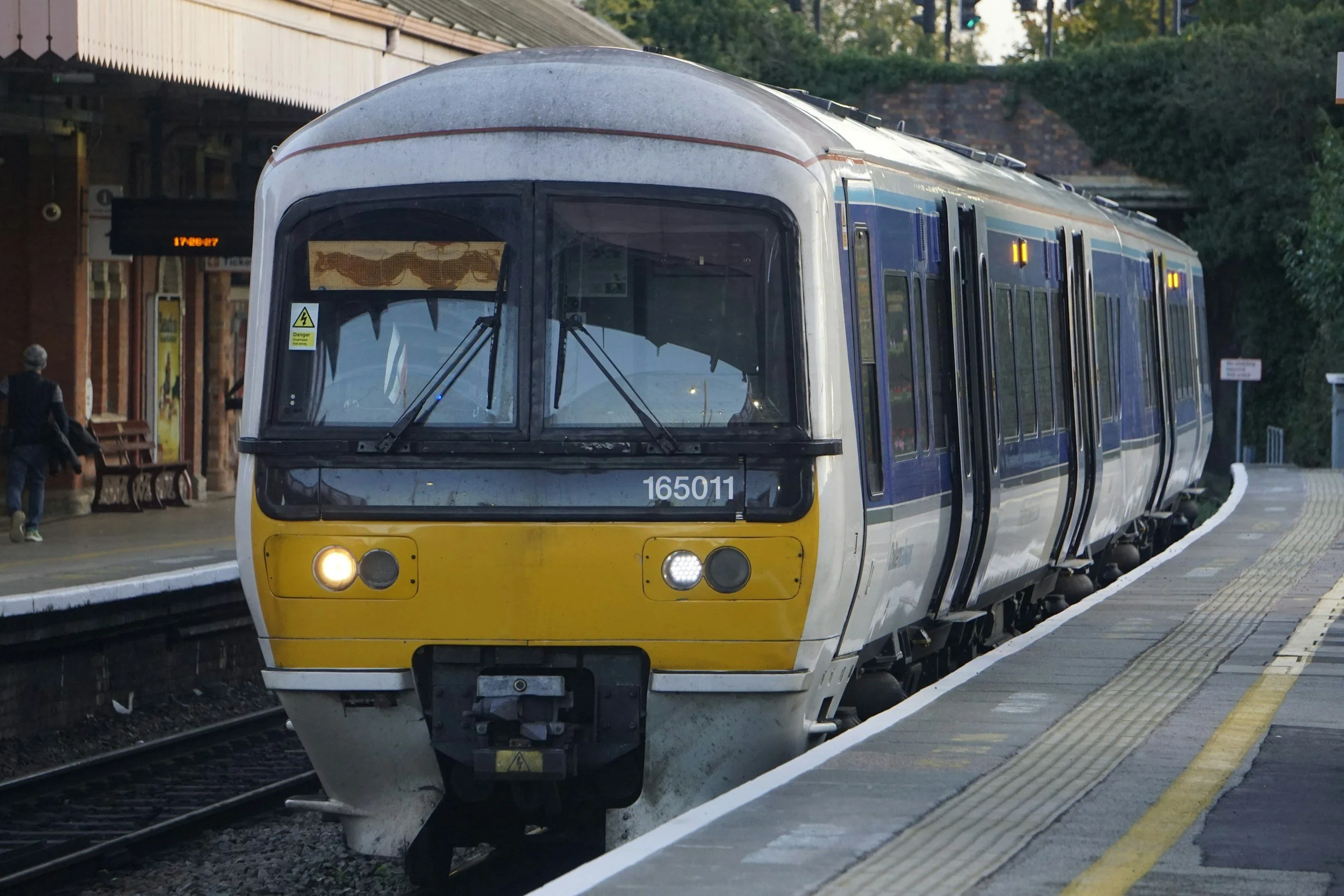
A local Chiltern Railways train. I wanted our customers to be able to use the TfL contactless system on our route too.
The System that London built
The contactless system I was trying to provide to Chiltern customers in 2013 deserves its reputation as a world-leading innovation.
London had already transformed ticketing once. The Oyster card, launched in 2003, took the transaction out of the journey: load money onto a card, touch in, touch out, and the system worked out what to charge.
From the mid-2000s, Transport for London and its banking partners began work on the next step. Why should customers have to acquire and top up a special card at all, when the bank card in their pocket could do the same job?
Contactless launched on London’s buses in December 2012 and across the Tube and rail network in September 2014, complete with daily and weekly price capping.
The result transformed the experience of using public transport. A visitor can land at Heathrow and travel across one of the world’s great cities without buying anything, understanding anything, or queuing for anything. A Londoner can move between bus, Tube, train and tram all day and be guaranteed the best available fare with a defined ceiling. London’s fares are still highly complex (there are seven different adult single rail fares between my home in Walthamstow and Richmond, for example) but no-one cares any more because no-one has to think about them.
The yearning
Almost every transport decision-maker in Europe has travelled on the London system, and most have admired it. “London-style ticketing” has become continental shorthand for a wholly reasonable ambition: travelling around any city should feel as effortless as travelling around London.
But what exactly is the thing being yearned for? When people say they love the London system, what do they love? I would list eight things, in three groups.
Time and effort
1) There is no ticket to buy. You walk in and you travel.
2) There is nothing extra to remember. You travel using something you have with you anyway. You don’t need a special card or ticket.
Money and price
3) You never overpay. The system works out the best fare for the journeys you actually made, after you made them.
4) Your spending has a ceiling. Daily and weekly caps mean that however much you travel, you never pay more than the equivalent season ticket.
Peace of mind
5) You cannot buy the wrong ticket. You are charged retrospectively for the journey you actually made, so the fear of being fined disappears.
6) You can change your plans. If you get a text on the train changing your plans, it’s no issue. The system charges you for what you did, not what you said you’d do.
7) You never have to predict your week. Nobody has to guess on Monday morning how many journeys they will make by Friday to figure out if a travelcard will be good value.
8) Pricing becomes invisible. You stop performing a transaction every time you travel, and the resentment that comes with repeatedly handing over money disappears with it.
About Digital PAYG
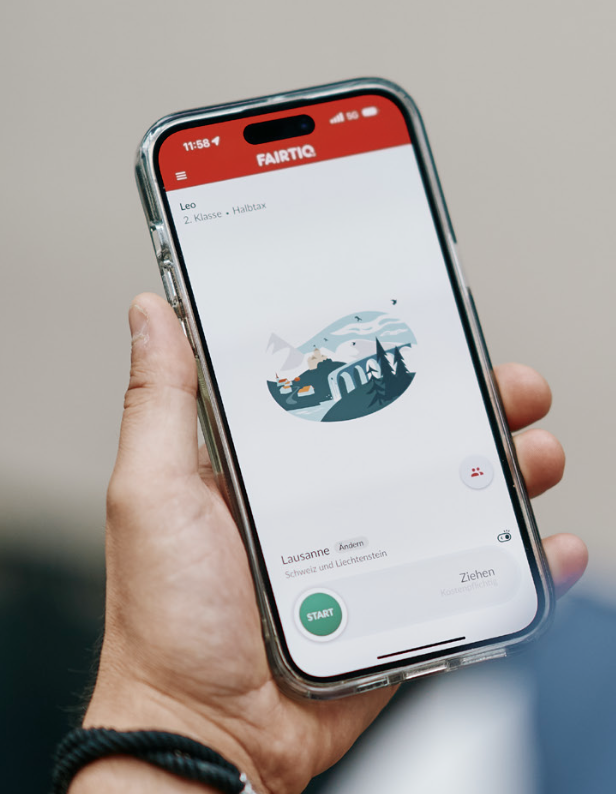
The Digital PAYG app from Fairtiq. Just swipe “start” and put your phone in your pocket.
Digital Pay As You Go is an app on your phone. When you start a journey, you swipe to check in. Your phone then uses its own sensors, mainly location, to work out the journey you make: which services you used, where you changed, where you got off.
When you finish travelling, you swipe to check out, and if you forget, the system notices your journey has ended and checks you out itself. Soon, the need for a starting swipe will be abolished, and you can simply let the app run in the background and it will automatically sense when you’re making a public transport journey.
As with Contactless, a back office looks at the journey you actually made and charges you the best available fare, with daily and weekly caps applied automatically.
In summary, it’s the same as London but delivered through your phone. The differences are all about the benefits gained from using a phone not a card: you can see information in real time, you can be informed on a screen and the system knows your whole journey rather than two taps at either end of it.
One clarification matters before we go further. Digital PAYG does not mean buying a ticket on your phone. Barcode ticketing, which millions of people already use on British trains and buses, is an existing proposition (choose a ticket, buy it, show it) on your phone. Barcode is the proposition I helped to kickstart, both at Chiltern Railways and at the Rail Delivery Group.
It's good but different. Digital PAYG removes the ticket altogether.
It also does not mean tapping your phone on a contactless reader, which is simply using your phone to access a bank card stored on your phone.
This report is about the primary ticketing system - the default channel most customers use for most journeys. That is Contactless in London, and it is Digital PAYG in Denmark. Most systems have niche channels alongside for specific groups (visitors, children, people without phones) but the core question is about the system that everyone thinks of when asked to buy a ticket.
Digital PAYG is about using the full capabilities of a modern smartphone to create the most frictionless travel possible. Think of it as London-style Plus (or even Plus Plus)
Where it is already normal
Though new to most of us in the UK, Digital PAYG is not a new concept. In Switzerland, whose integrated public transport network is the most sophisticated in the world, Digital PAYG has been operating since 2016, when FAIRTIQ launched it as EasyRide, fully embedded in the SBB (Swiss state railways) app and is now used for one in five Swiss rail journeys.
This Swiss system is both fully integrated and universal; covering every non-tourist train, tram, bus and boat in the entire country. It’s possible to swipe to check-in at an Alpine pier, and not touch your phone again for the rest of the day. In the background, the system will work out the cheapest fare for your boat trip across the lake, train journey to the city and tram ride across town.
While many other towns, cities and regions across Europe use Digital PAYG (including one public transport region stretching across three countries at the border of Germany, Belgium and the Netherlands; and the entire country of Austria), only one country has not only enabled Digital PAYG across its entire national ticketing system but also deliberately chosen to make it their primary ticketing channel. That country is Denmark, which decided to do so in 2023 and switched off its legacy transport ticketing system in summer 2026.
Interestingly, the system that Denmark already used was a card-based system (not dissimilar to Oyster) but they decided to replace it with FAIRTIQ-based Digital PAYG. It took less than a year from decision to launching the new system nationwide in September 2024. These timelines were made possible by the lack of need for physical infrastructure.
So, you've probably realised this isn't just an ordinary blog post.
It's actually the first few chapters of a report I've written on why Digital PAYG is the future, and why we have to stop obsessing about "London-style" ticketing.
My time writing the report was funded by Fairtiq (the leading Digital PAYG firm) but they’re all my own words and I had full editorial control.