With my opinions now carefully recorded, any of you will - in future - be able to gloat at me about all the things I got wrong.
If you're really looking forward to it, you can start now.
This year marks the fifth anniversary of this blog (albeit with the majority of that time spent in abeyance during my years at TfL), so you can see for yourself how I did. In the blog's first seven months I published well over a hundred posts.
I got a lot wrong but, overall, I feel pretty pleased with how I called the various transport innovations of recent years.
Autonomous Vehicles
During the AV hype boom, I pointed out that cars are a really hard place to start. Cars have to be able to go anywhere and respond correctly to anything. A vehicle that needs to do less and in fewer places might be a better place to start. I suggested buses or lorries.
But in the US, where the venture money flows, car is king, so the money went to firms like Cruise and Waymo, who focused on creating fleets of autonomous cars.
For years, they struggled. When I left TfL, the state of the art was almost exactly as it had been when I joined: limited operations in a small number of American cities. Cruise attempted to scale up in San Francisco and was then forced to scale down again following repeated problems. In the most serious incident, a Cruise car dragged a pedestrian who had already been hit by another vehicle. California suspended its driverless permits, the company pulled its fleet nationwide and at the end of 2024 General Motors ended Cruise's standalone robotaxi programme and folded much of the operation back into GM.
And then Waymo started to make progress. It now provides more than half a million paid rides a week in the US. It is also testing in London, where it intends to launch a commercial service.
Meanwhile Tesla, which promised full self-driving by 2017, launched "robotaxis" in Austin in 2025, initially with a member of staff on board. It now operates some unsupervised services there, but Tesla is still a very long way from replicating the scale of Waymo. Its supposed advantage from the data generated by its vast fleet of manually driven cars has not yet translated into anything approaching Waymo's scale.
So: humble pie? A slice, certainly. Cars got there first, and I thought buses might.
But before you gloat, look at how they got there. Tesla has not fulfilled its often-promised, often-delayed commitment to enabling self-drive anywhere.
The proposition that worked is Waymo, in defined, geofenced areas, in conditions it has approved, with remote assistance available when a vehicle gets confused. That is much closer to the constrained operating model I said the technology demanded than Tesla's original go-anywhere vision. What I got wrong was assuming that those constraints would favour buses over cars.
The frustration is that the bus industry still has a strong case. But Britain's first registered full-size autonomous bus service, across the Forth Road Bridge, lasted less than two years and carried two members of staff on every departure: a safety driver and a captain. We automated a bus and doubled its crew.
Listen to my podcast with James Dick at RATP about how Paris are motoring ahead on this.
VERDICT: right about why Level 5 would be hard, wrong about the vehicle - and wrong about just how far a geofenced car could get. One of my weaker predictions, truthfully.
Flying Taxis
Another one where I put myself on record was the market for electric Vertical Take-Off and Landing vehicles. When I wrote on this subject in 2021, my view was that the "flying taxi" model being promoted by firms like Volocopter, of short-hop urban travel, would not happen. Too unpopular, too elitist, too carbon-intensive.
I thought it would all take longer than envisaged (at the time, the main firms were promising launches by 2024, and Joby was aiming to have just under 1,000 aircraft in service by 2026). I thought there might be a niche market in long-distance commuting for the affluent. Imagine, if you will, Lord Cameron's journey from Chipping Norton to Westminster. I might hope he would drive to Oxford Parkway and travel with my former employer Chiltern Railways (he did, after all, open the station for us) but I would expect he would actually get an eVTOL.
Well, I was mostly right.
Volocopter, the teeny-tiny urban one, went insolvent in December 2024 and, despite subsequently being rescued, is nowhere near operating the urban flying-taxi network it was promising. Lilium, whose Swiss journey-time charts I rather admired, went insolvent in October 2024, was briefly rescued, went insolvent again in February 2025, and is no more. Rolls-Royce has walked away from the sector. Around $13 billion has been raised by eVTOL firms since 2019, and Joby and Archer still haven't launched a commercial passenger service.
Their launch plans tell you quite a lot about where this market has landed. Joby is trying to launch in Dubai; Archer in Abu Dhabi. These are places with very wealthy customers, governments prepared to back new technology and rather fewer objections to rich people flying over everyone else's heads than you might encounter in London.
And even there, the promised revolution remains stubbornly in the future.
So I wouldn't claim complete victory. The long-distance regional model I thought looked most plausible hasn't emerged either. But the mass urban flying-taxi market certainly hasn't happened, the timescales were fantasy, and the surviving proposition still looks much more like a premium product for the affluent than a mass-market solution to congestion.
Bristol's Vertical Aerospace, I'm pleased to report, is still going.
As for those nearly 1,000 Jobys supposed to be in service by 2026: the number actually in commercial service, as I type, is zero.
VERDICT: right about the timescales, right about how niche the market would be and right that this was never going to be a mass-market answer to urban congestion. Wrong, so far, about the regional model being the one that would emerge as none have emerged.
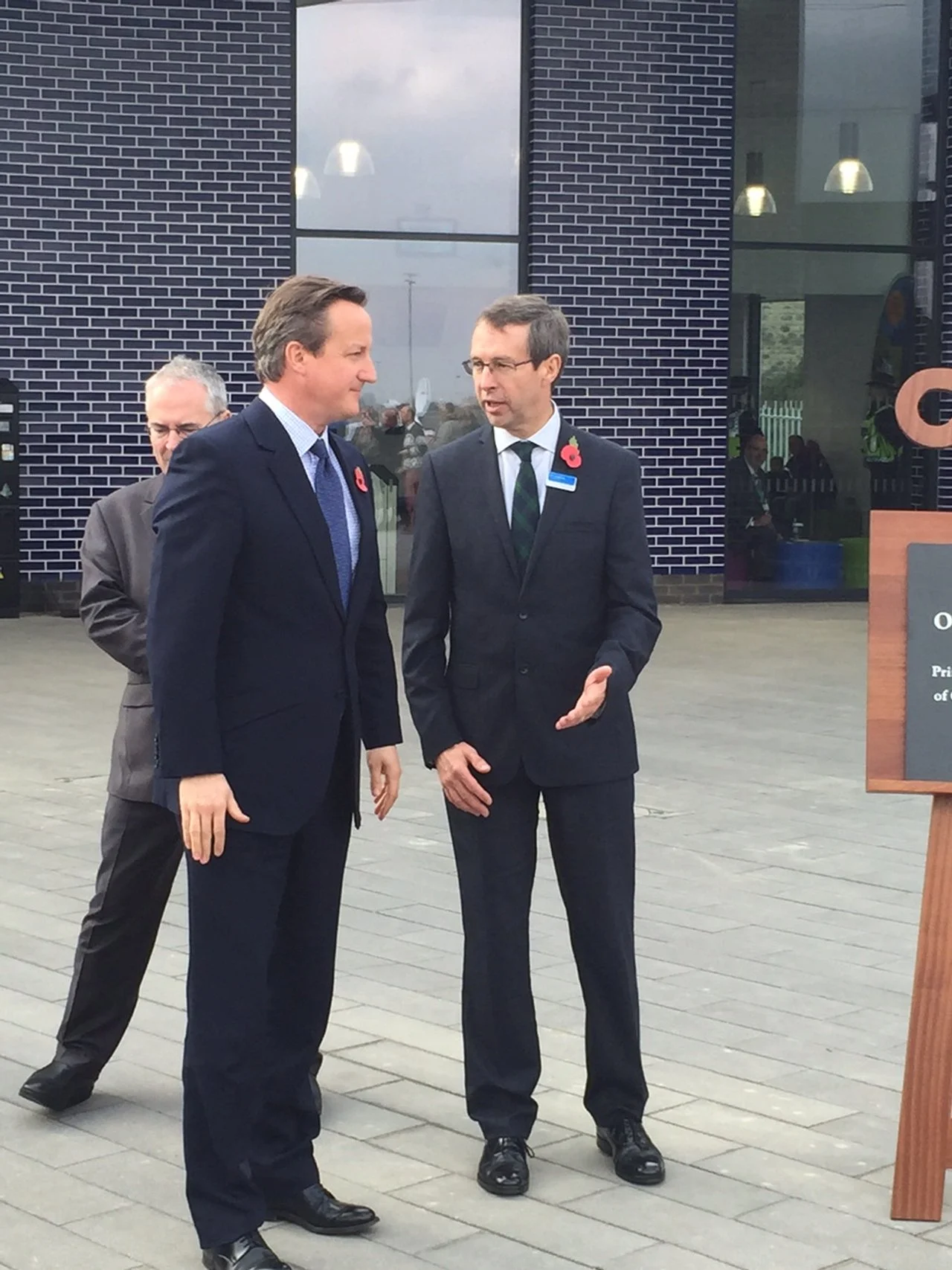
“I’m not sure we can clear the cars out of the car park to make room for your EVTOL, Lord Cameron”
Demand Responsive Transport
I wrote in 2021 that DRT offers a fantastic customer experience and is near-certain to lose money, and that the pilots being seeded with Government money would prove that customers love the service, right up until the funding ran out. When Milton Keynes replaced its tendered bus network with MK Connect, I predicted the flaw would be success: every extra passenger would need roughly the same subsidy as the last one, and the council would end up rationing a product people loved.
To Milton Keynes' genuine credit, MK Connect is still running, which makes it a survivor in this field. But look at how it survived: fares raised repeatedly (longer trips now cost up to £6.50), Sunday service abolished, operating hours trimmed, and opposition councillors complaining that £500,000 of planning-gain money had been diverted to prop it up. I say all this with the humility of a man whose own demand-responsive startup is in the ground. My scepticism was expensively earned.
VERDICT: Spot-on.
Mobility as a Service
In 2021 I argued that the original idea of MaaS, a Spotify-style subscription for unlimited travel, could never work, because mobility isn't software: the incremental passenger costs real money in a way the incremental Netflix stream does not. And I argued that the redefined version, MaaS as an everything-app, was a distraction.
In March 2024, MaaS Global, the Finnish company that invented the term, went bankrupt, taking its Whim app with it. It had raised around $162 million and reached roughly 10,000 active users in Helsinki; in its last reported year it lost €9.3 million on revenues of €3.8 million. That is the subscription arithmetic doing precisely what arithmetic does. As a man with a dead startup of my own, I take no pleasure in a founder's funeral, and Sampo Hietanen deserves real credit for forcing the industry to talk about integration. But the term MaaS is now a zombie and it needs to be put out of its misery - as I told the Transport Select Committee earlier this year.
VERDICT: I'd like to say I told you so. So I will.
The SPAC Class of 2021
In May 2021, I looked at the 26 mobility companies then merging with SPACs (Special Purpose Acquisition Companies) at a combined valuation of over $100 billion, and wrote that it seemed implausible there wouldn't be some spactacular blowouts along the way.
There were. Arrival: bankrupt. Bird: bankrupt. Canoo: bankrupt. Lilium and Volocopter: see above. The mobility SPAC class of 2020-21 has been very nearly wiped out, with the survivors (Joby and Archer among them) having spent five years as public companies without carrying a paying customer between them.
I should be honest, though: I hedged. My core prediction was “It’s too early to say where this all leads.” Not particularly confident. So I’m not really able to score myself on this one.
Teslas in Tunnels
In June 2021, I reviewed the newly opened Vegas Loop, in which Elon Musk claimed to have reinvented public transport by driving Teslas through a tunnel, and I suggested that his capacity claims (4,400 passengers an hour, rising to 50,000) would not survive contact with the real world.
Five years on, the Loop has grown to eleven stations, and it carried around four million passengers in total. That is five years of "the future of public transportation" moving fewer people than London's busiest bus route manages in six months. The Teslas still have human drivers in them. Rides to the airport currently run partly on ordinary surface streets, which, for a tunnel company, is quite the admission.
Fort Lauderdale, said in 2021 to be in the final stages of contract negotiation, was never built.
In another post from 2021, I described Elon Musk as a “climate fraud”. These were the days when he still claimed to have done more for sustainability than anyone else alive. Well, today, his core business is incinerating kerosene for rockets while buying up energy for AI. He is a climate fraud and, in addition, he’s self-radicalised into a neo Nazi.
His verdicts on Britain’s politics are nonsense because he describes a place he doesn’t know. His judgements on transport were always hamstrung by his own refusal to acknowledge his own ignorance.
VERDICT: don't let him get away with it. He’s an extraordinary entrepreneur and inventor but he’s a very bad man - and a proven climate fraud.
So, Is there a lesson?
I opened my flying taxi post, five years ago, with Amara's Law: that we overestimate the effect of a technology in the short run and underestimate it in the long run.
The short run has behaved exactly as Amara promised, with the 2024 launch dates, the 1,000 aircraft, the 50,000 passengers an hour and the all-you-can-eat travel subscriptions all being imssed.
The long run is now getting started…
And I’m still writing the blog, so the next gloating window is officially open!