2025: A year In Review
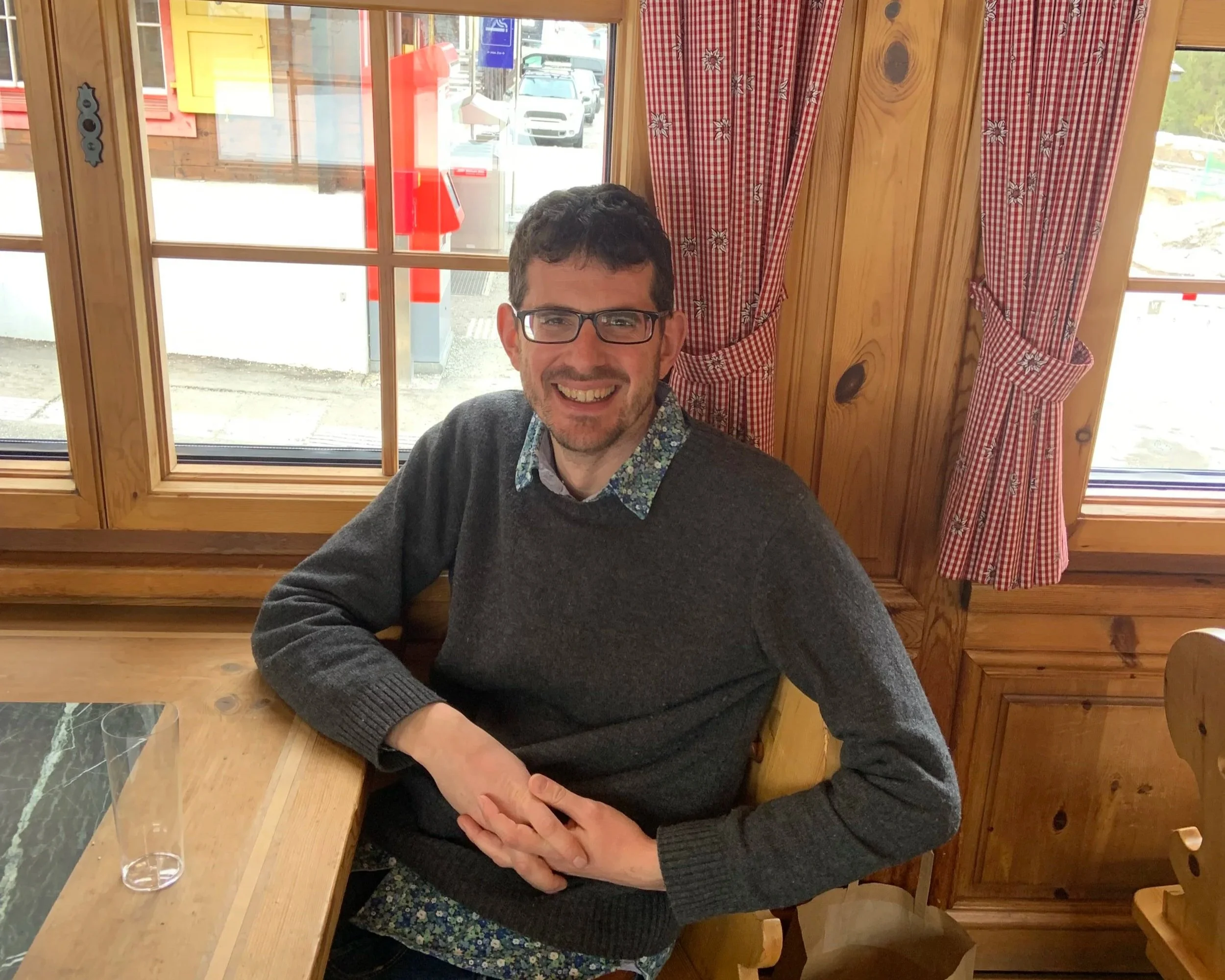
This is somewhere I went this year. Anyone know where I am?
It’s my last blog post of 2025. (“Noooooooo!”)
So I’m going to use it to look back at the year just gone.
And, let’s be honest, it’s not been the most cheerful year of our lives.
Trump in the White House has nearly been matched by chaotic politics throughout Europe.
Even the UK, which only recently elected a landslide majority Government, has felt much less stable than many others.
So let’s start our review with some positives.
Even at a difficult time, lots of good stuff is happening. We just need to find it.
Great Urban Leaders
One of the highlights of the last year has been speaking to so many city leaders who are making real, physical, transformational change on the ground.
Elke Van Den Brandt has achieved incredible things in Brussels as mobility minister, despite a highly unstable political situation and massive opposition. In part, she is following in the footsteps of Filip Watteeuw, whose circulation plan for Ghent has turned it into a role-model liveable city. I was there last year. It’s wonderful.
I also spoke with Lars Strongren, the deputy mayor of Stockholm about what he’s doing to turn the Swedish capital into a cycling city. Closer to home, Anne Shaw has recently taken up a new role as CEO of Transport Infrastructure Ireland. That’s following several decades spent turning Birmingham from Britain’s ultimate motor city into a pedestrian-friendly paradise. Do take a listen.
And much closer to home (for me at least), my own local inspirational transport leader is Clyde Loakes, who pushed through the Mini Holland project here in Walthamstow, which has turned my own neighbourhood into a suburb for people not vehicles.
When you have these conversations, you start to notice there’s almost a template, a phenomenon I talked about with Karen Vancluysen of the Polis network.
Stage 1: visionary leader has a great idea to transform the city away from cars and towards people
Stage 2: an incredibly noisy minority scream and shout. In every case, the visionary leader recieves death threats
Stage 3: the visionary leader stands out in the street day after day selling their vision. They begin to realise that the majority want this change, but they don’t want to join the argument so they say so quietly
Stage 4: the visionary leader implements the change. Almost immediately everyone loves it. No-one suggests changing it back.
Stage 5: the visionary leader is re-elected with an increased majority
This story plays out time and time again. If there’s one message I’d love politicians to take from these interviews (and, if you’re a politician, do listen to them!), it’s that all round Europe, people want their cities returned to them. Even drivers don’t enjoy driving in cities and not everyonce can. Everyone walks in cities. This stuff is popular but the change-resistent minority give a different impression.
Be brave because it’s rewarded at the ballot box.
Great innovation
I’ve also been lucky enough to spend time with some great innovation leaders delivering some great solutions. James Dick is leading the autonomous vehicle programme for Paris. There’s so much focus on robotaxis, but the positive opportunity for autonomous vehicles is in public transport. Paris is one of the few cities experimenting with full-size autonomous buses.
I thoroughly enjoyed my test ride of Christian Willoch’s autonomous vehicle service in Oslo. They have a vision for automous vehicles as an integral part of the public transport service, connecting the low-density suburbs people cannot otherwise reach without a car.
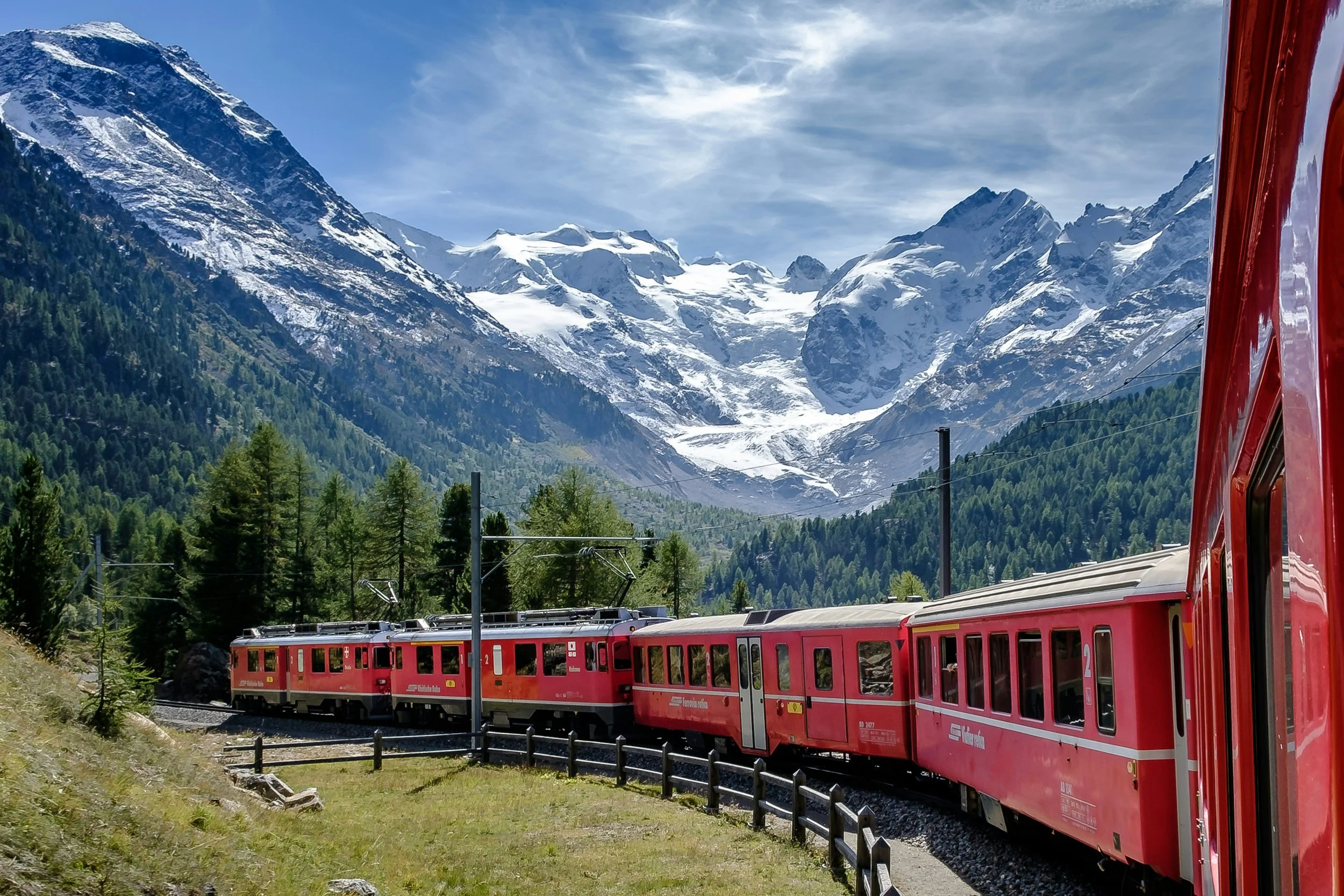
Various references to Switzerland mean there’s an excuse for photos of Swiss trains in mountains
Another way of delivering first and last mile connections is by e-bike. Caroline Seton is cofounder of London operator Forest with a very simple message: we need more bike parking!
Gian Mattia Schucan is the founder of one of my favourite transport startups, Fairtiq. They have delivered fully digital pay-as-you-go nationwide in Switzerland and are now pulling off the same trick in Denmark. How many solutions are as customer-friendly and yet have such a positive business case as Fairtiq?
Gian Mattia’s startup is scaled, whereas Anjali Devadasan’s is still at a very early stage. But how inspirational to talk to a young entrepreneur with such clarity of vision - and the ability to execute it. Do take a listen for the humbling backstory that inspired her business.
Great British Railways
If there’s been one transport story in the UK, it’s been the never-ending wait for Great British Railways. I’m told that it wouldn’t be lawful to appoint a CEO until the Bill has passed its second reading. I wish the civil servants had been able to find a creative solution to this. It’s somewhat uncomfortable watching central Government make decisions like branding without the person who’s going to have to deal with the consequences being around to influence them.
On branding, I’m a bit uncomfortable about a one-size-fits-all GBR brand. I wrote here about why a consistent GBR proposition doesn’t require everything to be the same.
But branding’s the least of it. My big (big!) worry about GBR is accountability. Read this post and bookmark it. If the accountability gap isn’t resolved, there will be consequences, felt by passengers in worse, reduced services.
One way of fixing this is to avoid creating a giant, GBR behomoth. There are many reasons why Switzerland has such a strong rail network. One of them is that SBB (the GBR-equivalent state railway) only runs about 40% of the network. Most is run by dozens of local railways owned by local cantons. I wrote about that here. Could the Railways Bill be flexed to enable this, or has that ship sailed? If anyone is an expert in Parliamentary drafting, would love to get your view.
The other big issue alongside accountability is funding. The Government keeps saying GBR’s not just a paint job, but withotu more money, it will be. As an example of why we need stable, long-term funding, just listen to Noel Dolphin on our electrification car crash. Luckily, there are international models for us to learn from. What a surprise: the Swiss funding model of a state infrastructure fund turns out to be the best!
Well, I say “the best”. Given state funding is essential, the Swiss model is the best state funding model available. However, the best model of all is to earn money from paying customers. I pitched some ideas for how to achieve this - and explained why free fares is a really bad idea.
A constant background rumble throughout the year has been the issue of complex rail fares and the need to fix it. In one of my most popular blog posts of the year, I voiced a real worry that we’ll fix the wrong things. Percieved complexity isn’t actually about complexity: it’s about cognitive effort and jeopardy. Do read this one.

Train tickets are seen as complex. But it’s not as simple as all that…
Great Transport Integration
If GBR has been one of the big transport news stories of the year, the other has been transport integration.
Throughout the country, combined authorities are flexing themselves into integrated transport authorities, as more and more start the process of re-regulating buses. For the first time in more than twenty years, the Government has spent the year writing an Integrated National Transport Strategy, which we can expect to see early in the new year.
But this stuff isn’t easy. For a reminder of how long integrated transport has been an unfilfilled ambition, I reviewed the relevant episode of Yes Minister, broadcast when I was a one year-old baby.
Part of the problem with transport integration is that it’s easily said but it’s not always clear what it means. So I wrote down what transport integration actually is, and how we measure it. For a more experiential description, here’s transport integration in action in Switzerland.
I also expressed a view that we shouldn’t be content with transport integration only being that good in Switzerland: we should make it happen here! Here’s my post inviting local communities to work with me on a Mini Switzerland demonstrator project. I got a superb reaction, so here’s a description of the project itself. And here’s the latest update.
While I’m (very) excited about Mini Switzerland, and really want to make it a reality: it’s only a small piece of the puzzle. The most important thing is that our transport authorities are set up for success. I spent a bit of time surveying the global landscape to figure out what good looks like.
Great Government?
This has been the first full year of the Labour Government.
I don’t think anyone would say they’ve lived up to expectations which, sadly, weren’t even that high.
Transport has been a comparatively strong area, with a team of expert ministers and a clear legislative agenda. However, the wider sense of strategic drift has even affected transport. Everyone’s clear that the railways are being renationalised; but fewer people understand why.
A Government that promised radical action on climate has approved multiple new runways and the Lower Thames Crossing, while refusing to build a new railway to replace the lost sections of HS2. Local transport investments are happening but it feels slow.
Here’s my six month review of the Government from nearly a year ago, here’s my review of the Comprehensive Spending Review and here’s my review of the Budget.
However, if you want an illustration of the good Government can do, then look at the work of Lee Waters, during his time as Welsh transport minister. His podcast episode is a masterclass in political change-making. Do take a listen.
Great…. AI???
If there’s been one story dominating the headlines (other than Trump and war), it’s been AI.
I’d genuinely love it if you’d read this article and then share it as widely as possible on social media. There are so many lessons humanity can learn from the previous technological revolutions in transport which, currently, we’re not learning. Please do help me get this important message out there.
Like so many other people, I also wrote down my thoughts on what AI will do to the future of work: obviously through a transport lens.
Great Ideas
One of the best bits of being a podcast host is being able to spend an hour a week talking about ideas.
One of the most important is the North-South divide. Britain’s productivity gap is overwhelmingly caused by our Northern cities. This is explained with great clarity by Paul Swinney, then of the Centre for Cities. Tom Forth gives the historical context: and the policy prescription.
Luckily change is happening (even if small) and one example was the opening of the Northumberland line. George Hazel explains how land value capture was used to part-fund this line, and can be used again in the future. Land value capture is just one of the ideas that the superb team at Create Streets focus on. They have a vision for better streets in better cities with better transport, articulately described by David Milner.
Jarrett Walker is one of my favourite thinkers about transport. Take a listen to one of my most popular episodes of the year for the “wall around your house”. Though increasingly, it’s not just about public transport. So why is Micromobility not delivering on its promise? Tom Nutley didn’t hold back!
Transport and politics are permanently intertwined, and there’s no-one better to discuss that relationship with than Stephen Bush of the FT. And if you’re interested in bus policy, then do enjoy this canter through the world of buses with Leon Daniels. It’s the only episode about which someone said they laughed out loud (and I think they meant it positively…).
How to Make Change Happen
My work is all about enabling and supporting transport changemakers. I’ll tell you a bit more about precisely what I do in the new year. But it means I spend a lot of time thinking about what’s needed for change in our tricky sector to happen.
One of the simplest, most important things is we have to become better at making decisions. This includes accepting that we don’t need all the information, and that some decisions are easily reversible and can be made quickly.
These principles also lend themselves to writing better business cases. Don’t assume a business case is a forecast: it’s not. Instead of focusing on excel, focus on learning. But what about major projects? There are still important business case lessons we can learn.

Read the article about using consultants to understand the context of this image.
One of the reasons we end up with such unecessarily complex business cases is that too many of our organisations are too reliant on consultants. Here’s my cut out ‘n’ keep guide for when to use consultants. Tldr: less than we do now.
What else do we need for change? Well, we need money and we need our people to be empowered enough to get on and try some stuff. Sometimes that means breaking the rules but it also means structuring our organisations the right way. Frank Elter provided guidance for the big corporate on remaining innovative.
The most important thing in making change happen, however, is a willingness to experiment. This can often seem risky, so do listen my podcast with Jonny Mood, director of the National Audit Office. Jonny is literally responsible for determining what is a good use of public money. If he says experimentation is ok, then it’s ok. And he does.
And, of course, good change in transport is ultimately always about people and community, as clearly described by Jane Cole of Blackpool Transport.
Most Popular Post
After all that, my most popular post of the year was something of a standalone. How would the Swiss have approached HS2, I asked? Not like we did! Join many thousands of other people in reading what they’d have done.
Merry Christmas
Believe it or not, this isn’t all of my posts this year. I also wrote about the challenge of commuting in Manchester, why civil servants won’t take decisions and the impact of American culture on transport. And about the decline of PLCs and there are still many more posts that I’ve not included in this run-through.
I hope you’ve enjoyed my writing this year. It’s a big time commitment doing it, and it’s all time I could be earning fees. I do it because I’m passionate about transport changemaking and - as an independent - I can say things others can’t.
But there’d be no point doing it if no-one read it. I’m particularly grateful to those of you who share my work on social media.
So a huge thank you to you, my readers. I really hope you enjoy reading Freewheeling next year.
Have a wonderful Christmas and safe travels wherever you go this festive season.