Lessons from Italy
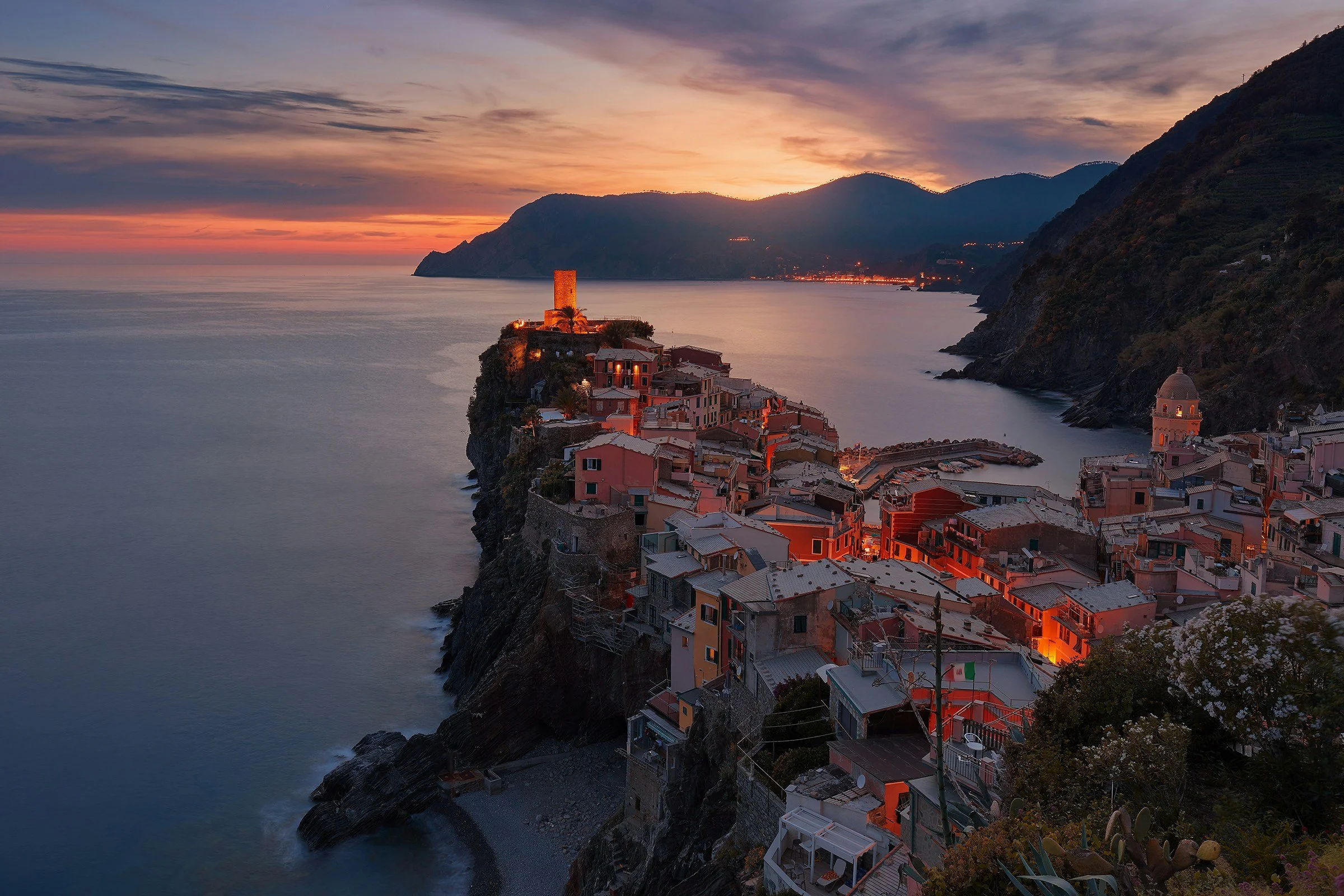
Italy has the best food, wine, cities, countryside, art, culture, architecture and ice cream in Europe. That’s why I keep going there.
It also has some of the worst public transport.
And, based on my experience of travelling around Italy by public transport earlier this year, I have two theories as to why.
They’re very different but - ironically - they end up in the same situation.
Theory 1: it’s because the people who run it don’t actually use it.
Theory 2: it’s because the people who run it know it too well.
In both cases, what they’re definitely not doing is looking at their experiences through the eyes of customers.
Allow me to present my evidence.
ATTEMPTING TO CATCH A BUS
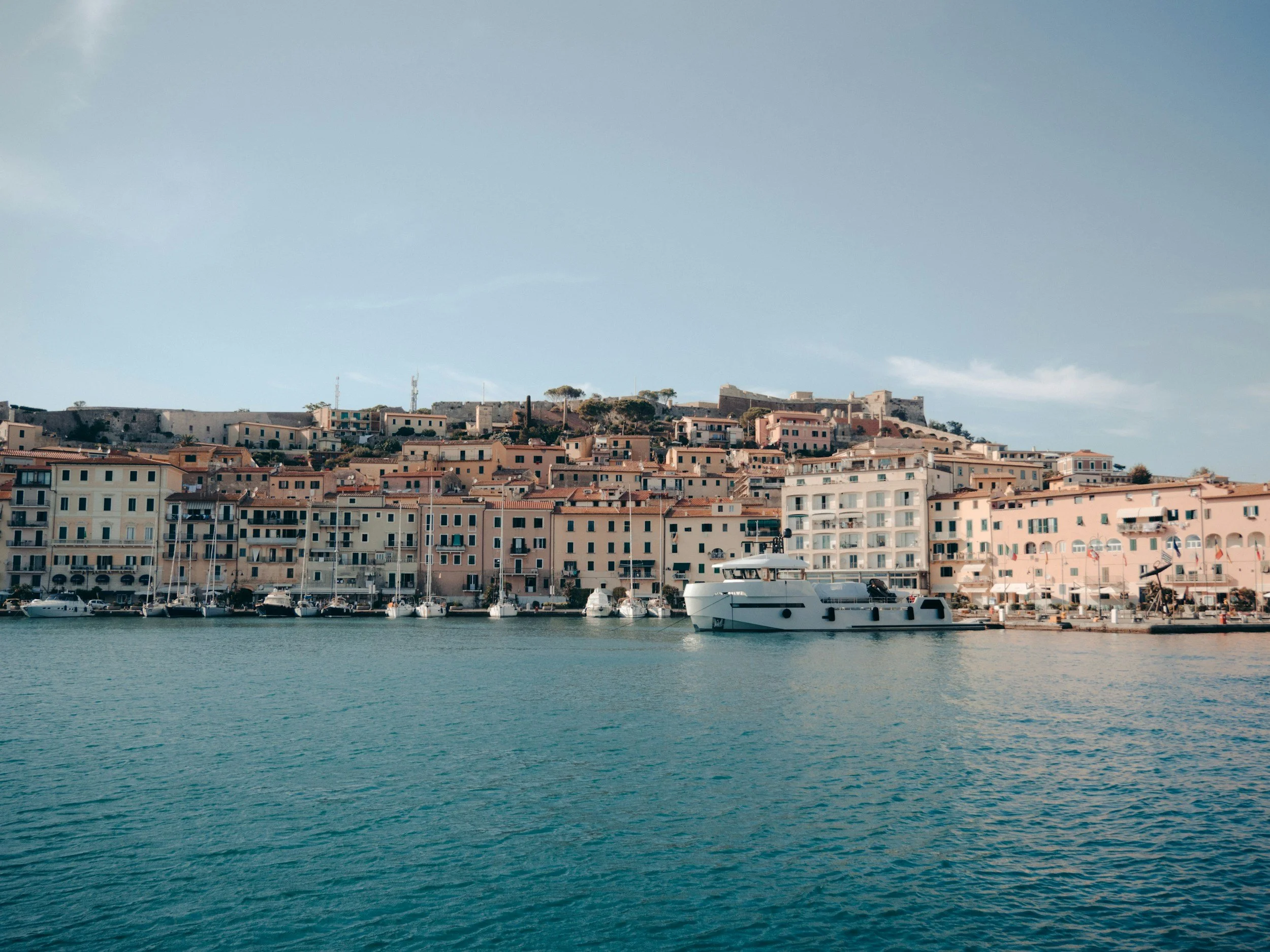
I didn’t think of taking a photo of the bus station in Portoferraio. I was on holiday! But here’s the town.
Let’s imagine we’re trying to go from Portoferraio to Marciano, both on the island of Elba. That’s easier for me to imagine than you, as I’ve actually tried doing it.
We check the app of the local operator Autolinee Toscane (AT) and discover that we need to get bus 116 at 1320.
So at 1310, we’re at Portoferraio bus station, waiting for the 116.
At about 1316, the 116 pulls in, so we get on.
And then we head off to a completely different part of Elba.
The AT app gives no indication there are four 116 buses at the same time! (Note that this screenshot is from a different day, when the bus was at 1315 not 1320).
How on earth has this happened?
Well, the app only showed us the route plan for the journey we had searched for.
What it didn’t tell us is that four different buses numbered 116 all leave at 1320 - all going to different places.
We got on the first to arrive, and it was the wrong one.
What about checking the front of the bus, you might ask?
Well, at Portoferrario, the buses board from the back. The only way to see the front would be to step into two lanes of traffic.
Not that it would matter much; three of the four 116 buses leaving at 1320 end up at Pomonte - just via different routes.
This is manifestly absurd.
Anyone who’s ever attempted to board a bus at Portoferraio would realise it’s almost perfectly designed to send you the wrong way.
Which is especially unhelpful on routes that only run a few times each day.
And if you’re going to have a system whereby you run buses to different places at the same time with the same number, you should design your app to deal with it.
But Autolinee Toscane is based four hours away in Florence and I very much doubt anyone from AT ever boards a bus in Portoferraio.
ATTEMPTING TO BUY A TRAIN TICKET
The flagship change customers will experience from GBR is a single app, publicly specified for the public good.
But just because public servants produce it, doesn’t necessarily mean it will be great.
Here is a salutary tale from my travels in Italy.
We stayed in Trieste and had a day trip to Udine.
The way the Trenitalia app works, you have to book onto a specific train, even for local services where the fares are always the same.
We didn’t know which train we would be travelling home on, so didn’t book the ticket until we got to the station.
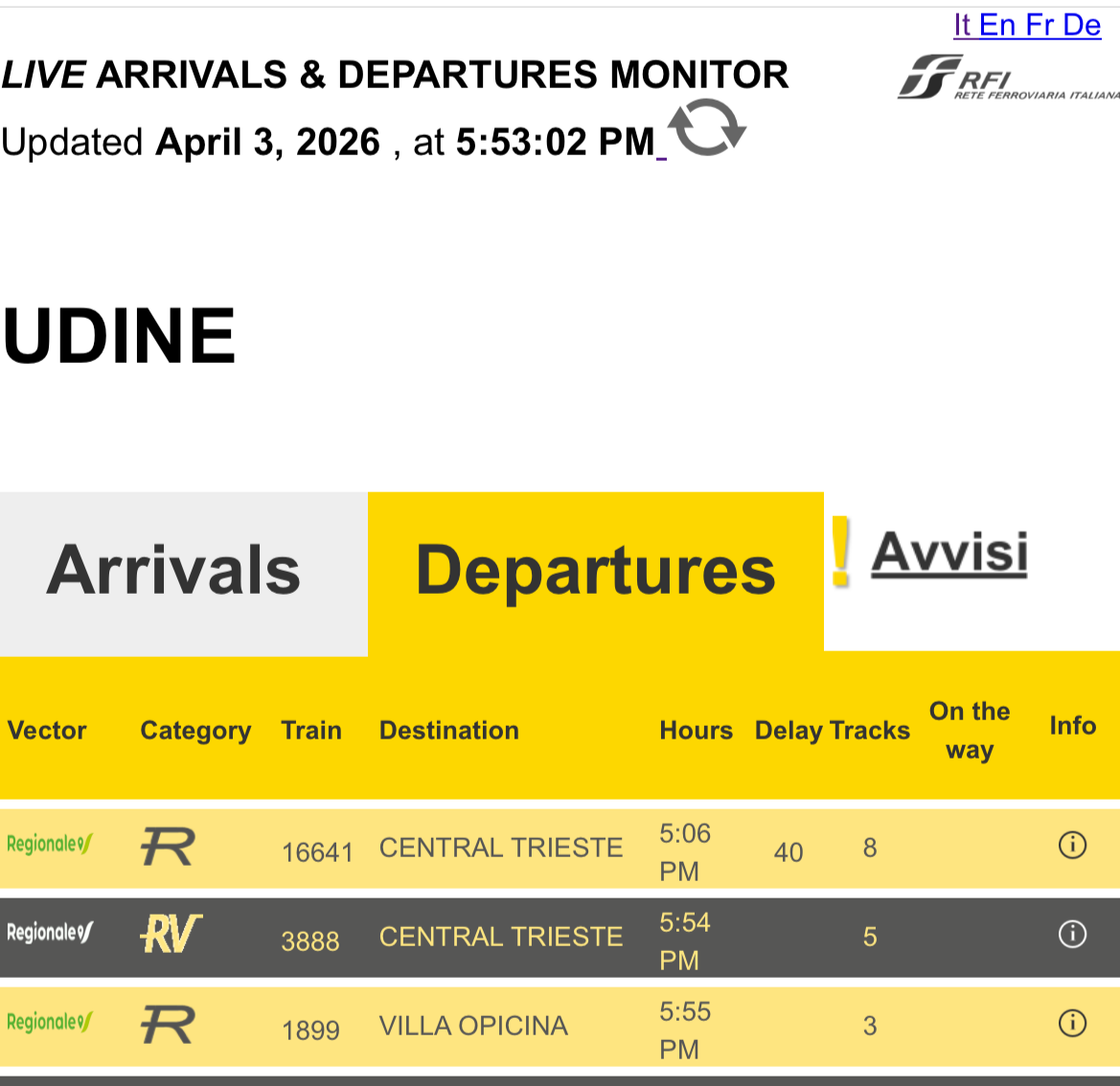
40 minutes late on the live departure board, but…
But when I tried to do it, I couldn’t.
I asked the Guard, who told me I needed to have booked more than 5 mins early.
Now that was irritating, given that, six minutes ago, we hadn’t known for certain we would be getting that train.
She said she could sell us the ticket, but it would cost an extra €5 per ticket. For a family of four, that would almost double the fare for a local journey.
There was another train 10 minutes later, so we decided to wait. Given what had just happened, I made sure I bought a ticket straightaway!
Just as we let the previous train go, a 10 min delay to the next train flickered onto the screen.
I checked the app. Hmmm - on the app it was 30 minutes late. Though on the online departure board, it was 40 minutes late. 10, 30 or 40, depending on the source? Neither encouraging.
Indeed, the times never aligned but all agreed it was late. It didn't feel we could rely on that train.
Not to worry, though, there are frequent trains to Trieste from Udine and the Trenitalia app allows you to change your booking at zero cost.
Not so fast!
Yes, there was another train to Trieste just two minutes later, but when I went onto the app to change our ticket, it just wasn’t listed.
The next train, according to the app, was half an hour later.
I later realised that it was because the train in two minutes went to Trieste via different intermediate calling points. Even though the origin, destination and journey time were the same, the system only offered trains that were identical in stopping pattern.
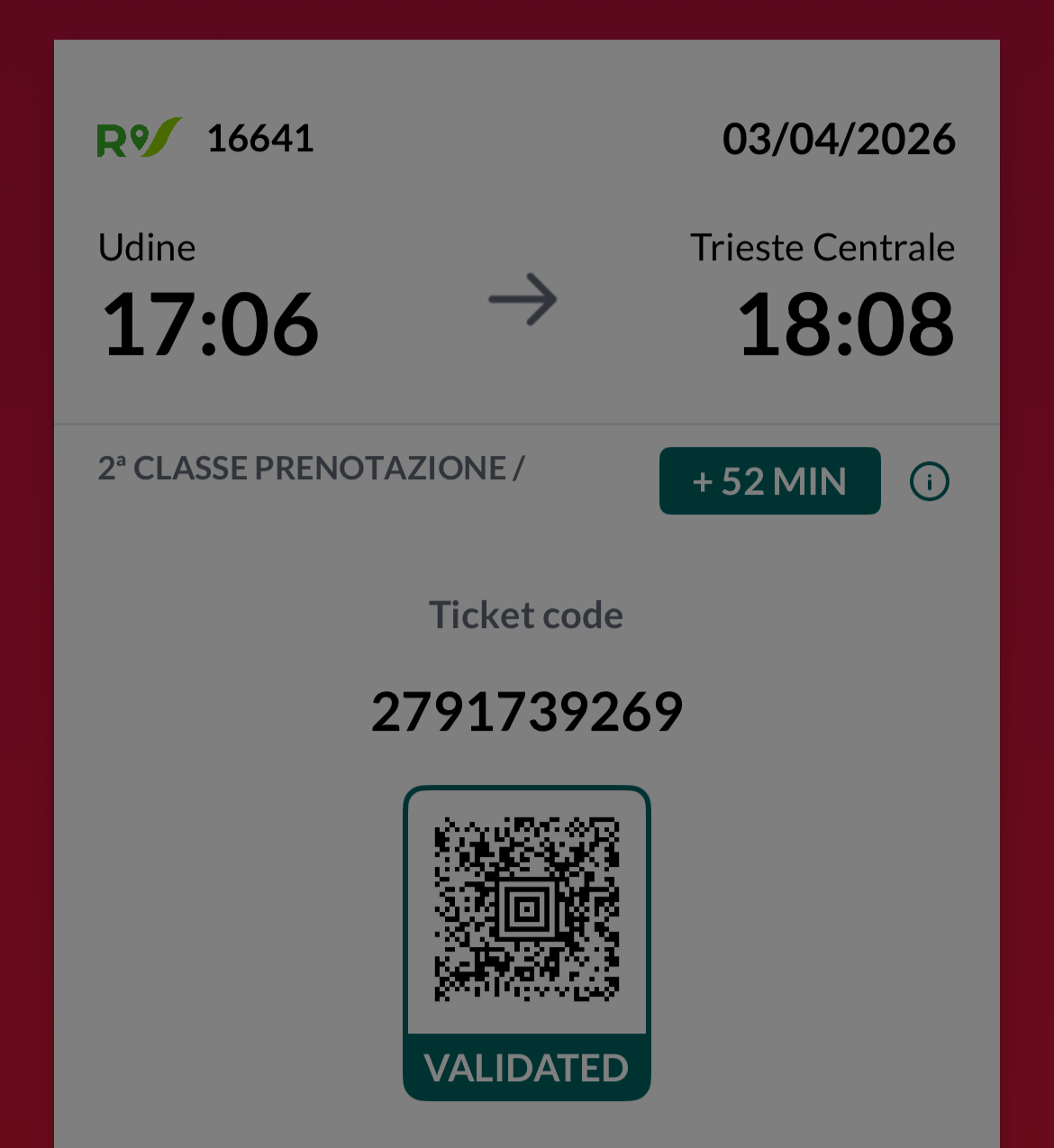
… simultaneously 52 minutes later on the app…
Not that it says that: the app only shows origin and destination; you have to do a bit of detective work using the actual timetable to work out why some trains aren’t listed as alternatives for people who’ve already booked.
But listed it wasn’t, so we had to watch that one leave.
But there would be another along soon and we could book onto that one, couldn’t we?
Again, not so fast!
Even though our booked train hadn’t even arrived, at the time it was due to have departed, the button to change to a different train vanished.
Despite the policy being that you can change to a different train before the train leaves, the app design made that impossible at precisely the time you most needed to do it.
We had now pre-paid for a ticket that was only valid on a train that didn’t seem to exist.
As a reminder, this is not what we in the UK would call an Advance ticket. This is what we’d call an Anytime ticket - a fully flexible ticket which you can buy at any ticket machine or ticket office. We’d just chosen to use the app.
We sat on the platform for an hour, watching the three information sources flash their wildly different delay numbers.
An hour after our train was due to leave, we got on another train to Trieste.
Technically, our ticket was invalid as we were booked on a train that was due to have left an hour earlier (even though we’d paid the price of a fully flexible local ticket) but that train hadn’t turned up - and there was no way of knowing if it ever would, nor any way of rebooking.
However, there was one good thing: our journey was so late that we were now entitled to compensation - and this can be claimed directly in the app.
But every time I pressed the button, it showed an error message and told me to “try later”. It carried on like that all the rest of the day. And the rest of the next day. Then the ticket vanished entirely, never to be seen again - and the compensation button vanished with it.
And that was that.
If the GBR app is like the Trenitalia app, we’ll have lots of frustrated customers.
Here’s the good news: if it’s like the SBB (Swiss Railways) app, it’ll be bloody amazing.
It would upset the Daily Mail, but I really hope the team charged with developing the GBR app are able to travel all round France, Switzerland, Germany and Italy by train, using the state railway apps and put the cost on expenses.
I’ve done precisely this (without the expenses…) over the last few months and could make a long list of the strengths and weaknesses of each app.
There’s a lot to learn out there - so let’s make sure we do.
ATTEMPTING TO FIND THE PLATFORM
If you change trains at Ancona for the local line to Bologna, you may need to get a train from platform 3 Ouest.
It’s possible you might not notice that crucial word “Ouest”.
That would be unfortunate, because Ancona station - as well as having platforms 1, 2 and 3 - also has platforms 1 Ouest, 2 Ouest and 3 Ouest.
If - as I did - you stand on platform 3 waiting for a train from 3 Ouest, you’ll be waiting a long time.
Now, I can argue that having two platforms with the same number at the same station is a recipe for confusion.
But that’s actually not the point I’m going to make here.
My point is a very specific one: there’s nothing on the platforms to tell you.
If there were signs to [←3 | 3 Ouest→], you would immediately spot that there were two 3s and check which was yours.
But the Ouest platforms are in a separate part of the station, not visible from the main platforms, and the only signs on the platform point to Sottopassaggio - which means Subway.
Now that’s not very helpful. No-one is trying to get to a subway; they’re trying to get to the places you can reach via the Subway.
The people who designed the station sign scheme for Ferrovia della Stato (FS - Italian State Railways) were being literal in pointing signs to the subway but distinctly unhelpful in not enumerating the platforms that could be reached in that direction.
THE VERDICT
So, three different experiences. Without evidence, here’s my judgement.
I convict the managers at Autolinee Toscane of never catching buses from Portoferraio, and therefore allowing a ludicrously confusing situation to occur every few hours every day.
I convict the managers of Ferrovia della Stato of never using the inhumane abomination of an app they inflict on their customers. They’ll have passes. Don’t you just know it.
But, conversely, I convict the managers of Ancona station of knowing that of course platform 3 Ouest is via the Subway. It would never occur to them it’s confusing as they’ve never put themselves in their customers’ shoes.
THE LESSON
It’s incredibly easy for managers to lose sight of how things look to their customers.
It’s especially easy if you never use the bloody service yourself.
But it’s also easy to do it through overfamiliarity.
Italian public transport is riddled with this behaviour.
If I had a prescription pad, I would prescribe every British public transport manager an annual attempt to cross Italy by public transport to see how confusing it can be when managers aren’t thinking of the customer.
But only if they promised to act on it when they got home.