What Next for the People People? part two
A post about the future of HR
Did you read last week’s post?
If not, possibly it’s worth starting there. Today’s is very much a sequel to a discussion of why HR needs to change. But for those who are taking a TL;DR approach, here’s the summary:
HR teams are often focused on rules and policies but not on people.
Traditional reward and management practices were designed for the 20th-century production-line environment of Henry Ford.
Modern work requires modern people teams.
Today’s post is about what those teams need to look like.
You’re empowered, ok
Autonomy in the workplace means giving employees the freedom to schedule their work and make decisions independently, while empowerment involves providing the tools, resources, and support they need to succeed.
Autonomy is enabled by empowerment and empowerment is enabled by culture. HR teams are a disproportionate driver of the culture. If the HR people are constantly telling you what to do, it’s hard to build a culture of autonomy.
Autonomy does not mean anarchy, nor does it mean absence of accountability. Indeed, it’s the opposite: a culture of autonomy needs to be paired with absolute clarity on the outcomes, and clear accountability to achieve those outcomes.
One of the challenges for transport organisations is that there are rules where you really can’t have much empowerment. Train drivers musn’t choose whether to stop at a red signal.
But there are also many (many!) roles in management and service delivery where empowerment is essential, and that empowerment needs to be role modelled.
Adrian Shooter, founder of Chiltern Railways and my former boss, while a nightmare to work for in so many ways, was excellent at this. Entrepreneurs often are. He would be very clear what needed to be achieved (sometimes big, like a new railway, sometimes small, like an impactful media launch) but he would never tell you how to do it. But, boy, did you feel accountable!
Culture in a startup (and Chiltern Railways had many of the characteristics of a startup) is set by the founder. In a bigger organisation, people teams can find a role for themselves in the future world of work by championing the culture change needed. HR teams can lead by example, showcasing autonomy in their projects and decision-making processes, thus inspiring others to follow.
People teams can be champions of flexible working. People teams can support line managers in learning how to empower (it’s often a skill that line managers simply haven’t learned). And people teams can organise symbolic events.
One symbolic event that could happen in a company of any size is the FedEx day. These were invented by software house Atlassian. We adopted them in Sn-ap and they were fantastic.
The idea is that for a 24 hour period everyone in the company has the opportunity to work on something (anything!), as long as they can deliver it in 24 hours (hence the name: FedEx “delivers in 24 hours”). People can work alone or in teams. The work does not have to be connected with their job.
I won’t go into detail now but the projects we got at Sn-ap were superb. Many were useful in their own right but the real value was in fostering that culture of autonomy. People teams can be the owners of these activities and the drivers of the culture change necessary.

It’s hard to come up with images to illustrate a post about HR. So here’s a picture I found on the internet of a steam train on the Glenfinnan Viaduct.
Do what you like
There is no law that says that we must have Job Descriptions written in the current inflexible format.
Most HR folk will explain that JDs exist to ensure compliance with a long list of workplace legislation. But while it’s essential that this legislation is complied with (and even more important that the sentiment of, for example, the Equality Act, is complied with), that doesn’t mean that JDs can’t be shorter, more focused on outcomes as opposed to tasks and constantly reviewed and flexed as organisations and their people learn more about each other. This approach allows for compliance with employment laws by clearly defining the scope of the role while offering flexibility to adapt to changing business needs.
For instance, an outcome-focused JD for a marketing role might list 'driving brand awareness and engagement through creative strategies' as opposed to listing specific tasks like 'post daily on social media.' This encourages employees to think creatively and make use of their strengths.
This would also help solve another problem that big organisations tend to suffer from: the problem of “trapped resources”. In a big, hierarchical organisation, it can be hard to ‘swarm’ a problem with all the company’s talent. At TfL I was always keen to champion the importance of bus journey times (improving bus journey times is one of those magical objectives that increases revenue, improves costs and achieves our other outcome goals). But the problem is that many of the company’s many talented people were focused on their JDs in their departments and couldn’t be moved. Flexible, outcome-focused JDs are part of the answer.
People teams need to become part of this future: championing outcome-focused JDs, and explaining the benefits. They can facilitate workshops focused on outcome-based management, teaching leaders how to set clear outcome-oriented goals, provide feedback and evaluate employee contributions beyond task completion.
Payment for performance
Probably the single most important message Dan Pink gave us last week was that payment for performance simply does not work for 21st-century jobs.
Obviously there’s an exception to everything. There are roles like sales where you probably get better performance with individual incentivisation (albeit with a risk of incentivising dodgy behaviour) but, in general, Dan Pink’s point in last week’s TED talk is that paying bonuses linked to objectives doesn’t actually help you get better performance.
Again, startups can show the way here: the norm in the startup sector is for teams to be rewarded with share options. This means that reward is linked directly to the value of the company - and only to long-term value of the company, as the options aren’t realised until an exit event (i.e. the company is listed on the stock exchange or sold).
You might argue that the wait is an issue but if employees are so dependent on the annual bonus that not getting one is an issue then it’s ceased to become a motivator. It’s mentally baked into the base and not getting one becomes the issue. Instead of a motivator, you have a demotivator.
Some corporates have tried to replicate the effects of share options with Long Term Incentive Plans (LTIPs) but the formulas to calculate payouts can be so complex that they’re neither a motivator nor a demotivator. I remember when I first became senior enough to qualify for the Arriva LTIPs. After having stared at paragraph after paragraph of equations and formulae, I went back to my job. Like most people, I couldn’t possibly remember the detail of how the payment would be calculated, so any theoretical incentivisation is lost.
The future of reward needs to be much, much simpler. Research has repeatedly shown that incentive plans and bonus payments don’t do anything to incentivise most people, so stick to a simple salary. Possibly with a very simple long-term reward tied to the highest-level corporate objectives.
The crucial thing is that everyone should get the same (long-term!) bonus and everyone should get the same pay rise. When you think about how much in your organisation involves teamwork, why would we even consider incentivising at the level of an individual? It simply doesn’t make sense.
This one’s going to be tricky for HR teams as "Reward” is an industry in its own right (someone’s got to create the complex formulas!) but I’m glad to report that they won’t all be out of a job. After all, there’s still a place for strengthening a company’s reward, but instead of bonus schemes it can be focused on collective benefits, flexible working and small-but-valued ‘thank you’ gifts that bring a smile without distorting incentives.
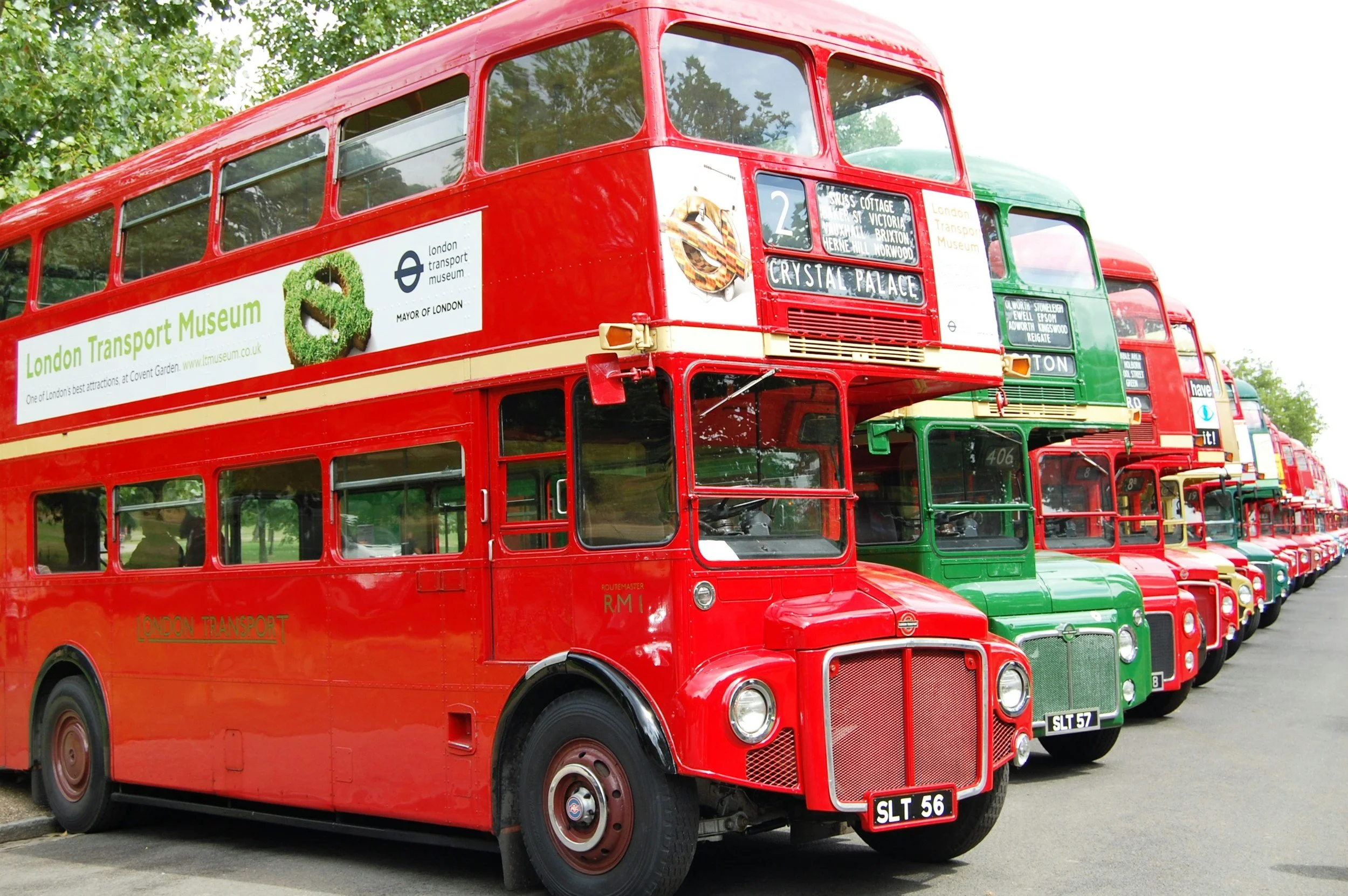
It’s still hard to come up with an image to illustrate a post about HR. So here’s a picture I found on the internet of a row of Routemaster buses.
Personalised career development
Even though Reward teams will need to retrain, they will not be out of work, and the process of retraining will help them empathise in their new work. Because one growth area for People teams will be in supporting people as they develop their career.
One of the curious features of many workplaces is the gilded elite for whom the company is willing to invest in career development (typically the most senior and graduates) and the much larger mass (typically people on whom the company depends) for whom they are not. Currently, helping all those other “human resources” reach the top of their game is not seen as part of the HR job.
I remember leaving National Express in 2009 after seven years at the company and being well aware that I would never again be a “former graduate”, with all of the benefits that implies. Graduate trainees are given training courses, mentor schemes, buddy networks, career coaching: you name it. Then we fend for ourselves for a bit. Then, as a director, it all happens all over again.
Meanwhile, most organisations have managers who don’t know how to manage and leaders who don’t know how to lead. There are people with aptitudes that are better aligned to a role other than their own, and people who would love their job but simply don’t have the skills to excel at it.
People teams can be the future champions of lifelong learning and career development.
You might worry that the small number of Reward Managers redeployed will be insufficient for the task, but this is one of the areas that is going to be transformed by AI. In an organisation of 50,000, how on earth do you match everyones’s skills, aptitudes, experiences and preferences and then provide personalised coaching and support. That’s hard for a human but much easier for AI.
Managing this activities will, again, be able to be resourced within the footprint of existing HR teams as all those tedious compliance courses (“If someone hands you a bag of cash in a toilet in return for doing something illegal, do you (a) take the money or (b) report it to your local Compliance Officer?”) and in-house training days can be replaced with personalised coaching, accessible to all. Learning and development teams will become the facilitators of AI-based coaching, not the providers of training.
This is going to require the AI industry to do a lot of work to deal with the unconscious bias that AI systems have picked up from the humans who created the material on which they trained: but there is no doubt this is a priority for the sector already and huge progress has been made in the last year.
People teams of the future
Work is changing. The 20th-century HR model was created around 20th-century work.
If HR teams are going to add value to the future, they need to be the drivers of a transformative shift towards a more flexible, empowering and inclusive work environment.
Whether it’s Octopus Energy or Northumberland Park depot, we know it can be done. It just needs to become universal. This means a departure from rigid job descriptions and traditional reward systems, advocating instead for outcome-focused roles, autonomy, empowerment, personalised career development and a culture that encourages innovation and collaboration.
The best HR teams will be at the forefront of championing these changes, making use of the status they so eagerly sought during the transition from Personnel to drive the cultural change that will underpin the future workplace.
The journey ahead for HR is both challenging and exciting, promising a future where work is not just about delivering tasks, but also about how we grow, innovate and contribute to a greater collective purpose.
More fun than simply interpreting the law in the context of the company’s policies, eh?
Take action!
Freewheeling teams display a bias to action. Take action now.
If you work in HR:
Set up a Fed-Ex day. It requires no money, no resources (other than a willingness to shell out on some pizza for the inevitable late night) and works in every organisation large or small
Reevaluate Job Descriptions: Review your current job descriptions. Set up a briefing with your senior team to agree a shift from task-based to outcome-based descriptions. Then workshop with your people leaders to identify key outcomes for each role and revise job descriptions to reflect these.
Reassess your Reward Systems: Reward systems are hard to change without upsetting people. But agree a target with your senior team that over the next five years you’ll transition from traditional performance-based incentives to more holistic reward systems that emphasise teamwork and collective achievement. No bonuses and equal pay rises!
If you don’t work in HR:
Set up a Fed-Ex day. This doesn’t need to be led by the HR team. It’s one 24 hour period, so sell the idea internally and make it happen!
Bcome the role model team: Turn your area into a role-model for empowerment, accountability and life-long learning. Demonstrate to the rest of the organisation why it works.