
A blog about changemaking in transport
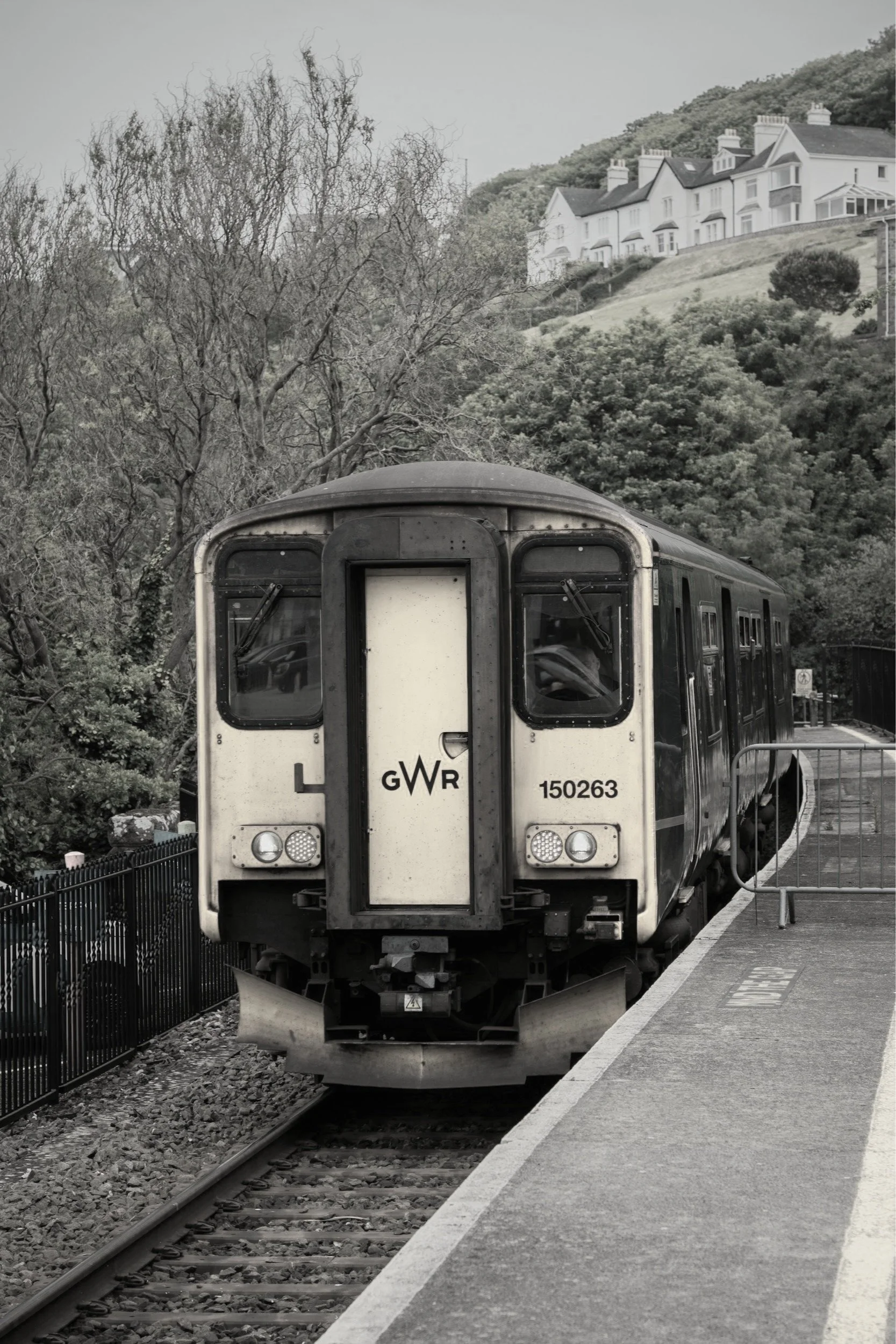
I Mean It: Let’s Actually Try Franchising the Railways
Believe it or not, we’ve never tried franchising the railways.
But we really should.
I don’t mean the thing that DfT called franchising and which we tried for the last 30 years.
I mean actual franchising, like McDonalds do it.
Its time may have come!

The non-Economic Case for Mini Switzerland
Last week, I wrote my economic case for Mini Switzerland.
This week, an economist tells me I’ve got it wrong.
Instead, he thinks, we should focus less on numbers and more on the value it provides to the communities it serves.
What do you think?

The Economic Case for Mini Switzerland
Is there an economic case for Mini Switzerland? If so, what is it?
Today’s post argues that the economic case is built around agglomoration (i.e. making urban centres more economically productive) and on preventing the brain drain from rural areas.
Today’s is the first of two parts; next week, we look at a differerent approach to case-making Mini Switzerland.

How A.I. Can Benefit Transport, Part 2
The second in a two-part series with ideas for how AI can help us in transport organisations.
The technology is evolving so fast, anything’s possible.
But this is a transformative technology and we should use it to make our organisations work better.

How A.I. Can Benefit Transport
If I were still working at Chiltern Railways right now, I know that the expectation on me would be to find ways in which we can maximise the use of AI to benefit our customers.
So what could they be?

HS2 could be comedy gold
Hugh Bonneville managed to lampoon the BBC and Olympics while enhancing their reputations.
Time for the same treatment of HS2!

Autonomous Vehicles Aren’t That Special
Transport policy is actually very simple: it’s about enabling the maximum opportunity through connections, while doing the least possible harm.
Autonomous vehicles risk distracting us into thinking they’re something special, but the policy approach should be exactly the same.

Stop Talking About London-style Ticketing
One in five Swiss journeys are made using Digital Pay-As-You-Go, a system that uses your phone location to track your journeys and automatically charge you the cheapest fare for the journeys you make.
This offers the benefits of Contactless - plus many more. Yet in the UK, we’re obsessed with “London-style” ticketing.
It’s time to move beyond Contactless cards.

Lessons from Italy
Italy’s my favourite country in the world, but their transport system does not feel like it was designed for customers.
Here are three case studies which, I believe, are a toxic mix of managers never actually using their own services - and managers being overfamiliar and not being able to see things through customers’ eyes.
As the public sector takes more control in the UK, there are lessons to learn.

Why revenue is the right target for the railway
A railway focused on revenue is also a railway focused on punctuality, customer satisfaction and growth.
A railway focused on revenue will look under every stone to find a way to make things better for customers.
I know this because I used to work for one.

Punctuality is not a good proxy for rail passenger experience
When trying to offer a better passenger experience, the rail industry is programmed to focus on punctuality.
But my family’s experiences over the summer show a poor correlation between trains on time and stress-free journeys.

Percy Weasley’s In-Tray
Did you know that Percy Weasley went on to become Head of the Department of Magical Transportation?
What did he have to deal with?
Well, I’ve been looking at the numbers and we have a serious lack of magical active travel, a lack of sustainable modes for kids and a woefully inadequate rail service.
Today’s blog is a deep dive into the transport of the Wizarding World.

Britain's hokey cokey economic cluster
The Oxford - Cambridge Growth Corridor is one of the UK’s biggest opportunities.
But it’s in danger of failing - because of transport.
It’s a fiendishly complex puzzle but with a huge opportunity to be realised.
This post is about why transport is at the heart of the challenge - and a cry for Government leadership.

Why Was No MP Capable of Being Prime Minister?
Why, without Andy Burnham, did Labour seem doomed? How can a party with 403 MPs not have a single person deemed capable of becoming Prime Minister.
I would argue that this is a flaw in institutional decision-making. It’s about how MPs are chosen, and it definitely affects both main parties.
It’s also a golden opportunity for Andy Burnham to make a difference.

How to get More Young people onto Public Transport
The public transport industry takes young people for granted.
That’s dangerous and needs to stop.
Here’s how.

GBR Urgently needs a Brand Strategy
The trains are being painted but it’s not yet clear what the brand is meant to mean.
Brand strategy is not an afterthought - it’s a fundamental driver of customer experience. It should be one of the first and most important decisions.
And - this is crucial - brand strategy is not the same as org structure.

A Note To Andy Burnham
A letter to the next Prime Minister about how he can use devolution to both serve the country and his own political ends.
Power to the people!

Leadership is about direction, people and money - and escalations
I had time to think about what the key tasks of leadership are when my startup was suddenly annihilated by the pandemic.
Having realised, I can see that Sir Keir Starmer just doesn’t have those particular skills.

What’s Waltham Abbey got to do with keeping Britain as a global leader?
London bankrolls the rest of the UK but its productivity is falling. It needs a new way of thinking about its own economy if it is to maintain its global competitiveness. Both London and the wider UK depend on getting this right.

Numbers Can Be Dangerous
We’ve rebuilt roundabouts, crashed the economy and supported potentially harmful technologies - all through unquestioning faith in flawed numbers.
Meanwhile, non-numerical evidence is no longer seen as legitimate.
Better decision-making requires us to question numbers more and value all sources of evidence equally.